Khóa học
IELTS Online
IELTS Online
Giảm đến 18%
Đăng ký ngay
Mục lục [Ẩn]
Bài “Does Education Fuel Economic Growth – IELTS Reading” là một chủ đề học thuật thú vị, xoay quanh mối quan hệ giữa giáo dục, năng suất lao động và tăng trưởng kinh tế. Trong bài viết này, Langmaster sẽ cung cấp đề bài, đáp án chi tiết và giải thích rõ ràng từng câu hỏi, giúp bạn hiểu sâu nội dung và nâng cao kỹ năng làm bài Reading hiệu quả. Đây là tài liệu hữu ích cho những ai đang ôn luyện IELTS Reading và muốn cải thiện điểm số nhanh chóng.
Does education fuel economic growth?
A. Over the last decade, a huge database about the lives of southwest German villagers between 1600 and 1900 has been compiled by a team led by Professor Sheilagh Ogilvie at Cambridge University’s Faculty of Economics. It includes court records, guild ledgers, parish registers, village censuses, tax lists and – the most recent addition – 9,000 handwritten inventories listing over a million personal possessions belonging to ordinary women and men across three centuries. Ogilvie, who discovered the inventories in the archives of two German communities 30 years ago, believes they may hold the answer to a conundrum that has long puzzled economists: the lack of evidence for a causal link between education and a country’s economic growth.
B. As Ogilvie explains, ‘Education helps us to work more productively, invent better technology, and earn more … surely it must be critical for economic growth? But, if you look back through history, there’s no evidence that having a high literacy rate made a country industrialise earlier.’ Between 1600 and 1900, England had only mediocre literacy rates by European standards, yet its economy grew fast and it was the first country to industrialise. During this period, Germany and Scandinavia had excellent literacy rates, but their economies grew slowly and they industrialised late. ‘Modern cross-country analyses have also struggled to fnd evidence that education causes economic growth, even though there is plenty of evidence that growth increases education,’ she adds.
C. In the handwritten inventories that Ogilvie is analyzing are the belongings of women and men at marriage, remarriage and death. From badger skins to Bibles, sewing machines to scarlet bodices – the villagers’ entire worldly goods are included. Inventories of agricultural equipment and craft tools reveal economic activities; ownership of books and education related objects like pens and slates suggests how people learned. In addition, the tax lists included in the database record the value of farms, workshops, assets and debts; signatures and people’s estimates of their age indicate literacy and numeracy levels; and court records reveal obstacles (such as the activities of the guilds) that stifled industry.
Previous studies usually had just one way of linking education with economic growth – the presence of schools and printing presses, perhaps, or school enrolment, or the ability to sign names. According to Ogilvie, the database provides multiple indicators for the same individuals, making it possible to analyze links between literacy, numeracy, wealth, and industriousness, for individual women and men over the long term.
D. Ogilvie and her team have been building the vast database of material possessions on top of their full demographic reconstruction of the people who lived in these two German communities. ‘We can follow the same people – and their descendants – across 300 years of educational and economic change,’ she says. Individual lives have unfolded before their eyes. Stories like that of the 24-year-olds Ana Regina and Magdalena Riethmüllerin, who were chastised in 1707 for reading books in church instead of listening to the sermon. ‘This tells us they were continuing to develop their reading skills at least a decade after leaving school,’ explains Ogilvie. The database also reveals the case of Juliana Schweickherdt, a 50-year-old spinster living in the small Black Forest community of Wildberg, who was reprimanded in 1752 by the local weavers’ guild for ‘weaving cloth and combing wool, counter to the guild ordinance’. When Juliana continued taking jobs reserved for male guild members, she was summoned before the guild court and told to pay a fine equivalent to one third of a servant’s annual wage. It was a small act of defiance by today’s standards, but it reflects a time when laws in Germany and elsewhere regulated people’s access to labor markets. The dominance of guilds not only prevented people from using their skills, but also held back even the simplest industrial innovation.
E. The data-gathering phase of the project has been completed and now, according to Ogilvie, it is time ‘to ask the big questions’. One way to look at whether education causes economic growth is to ‘hold wealth constant’. This involves following the lives of different people with the same level of wealth over a period of time. If wealth is constant, it is possible to discover whether education was, for example, linked to the cultivation of new crops, or to the adoption of industrial innovations like sewing machines. The team will also ask what aspect of education helped people engage more with productive and innovative activities. Was it, for instance, literacy, numeracy, book ownership, years of schooling? Was there a threshold level – a tipping point – that needed to be reached to affect economic performance?
F. Ogilvie hopes to start finding answers to these questions over the next few years. One thing is already clear, she says: the relationship between education and economic growth is far from straightforward. ‘German-speaking central Europe is an excellent laboratory for testing theories of economic growth,’ she explains. Between 1600 and 1900, literacy rates and book ownership were high and yet the region remained poor. It was also the case that local guilds and merchant associations were extremely powerful and legislated against anything that undermined their monopolies. In villages throughout the region, guilds blocked labor migration and resisted changes that might reduce their influence.
‘Early findings suggest that the potential benefits of education for the economy can be held back by other barriers, and this has implications for today,’ says Ogilvie. ‘Huge amounts are spent improving education in developing countries, but this spending can fail to deliver economic growth if restrictions block people – especially women and the poor – from using their education in economically productive ways. If economic institutions are poorly set up, for instance, education can’t lead to growth.’
Questions 14–18
Reading Passage 2 has six sections, A–F.
Which section contains the following information?
Write the correct letter, A–F, in boxes 14–18 on your answer sheet.
14. an explanation of the need for research to focus on individuals with a fairly consistent income.
15. examples of the sources the database has been compiled from.
16. an account of one individual’s refusal to obey an order.
17. a reference to a region being particularly suited to research into the link between education and economic growth.
18. examples of the items included in a list of personal possessions.
Questions 19–22
Complete the summary below.
Choose ONE WORD from the passage for each answer.
Write your answers in boxes 19–22 on your answer sheet
Demographic reconstruction of two German communities
The database that Ogilvie and her team has compiled sheds light on the lives of a range of individuals, as well as those of their 19.__________________, over a 300-year period. For example, Ana Regina and Magdalena Riethmüllerin were reprimanded for reading while they should have been paying attention to a 20________________. There was also Juliana Schweickherdt, who came to the notice of the weavers’ guild in the year 1752 for breaking guild rules. As a punishment, she was later given a 21._____________. Cases like this illustrate how the guilds could prevent 22.____________________and stop skilled people from working.
Questions 23 and 24
Choose TWO letters, A–E.
Write the correct letters in boxes 23 and 24 on your answer sheet.
Which TWO of the following statements does the writer make about literacy rates in Section B?
Questions 25 and 26
Choose TWO letters, A–E.
Write the correct letters in boxes 25 and 26 on your answer sheet.
Which TWO of the following statements does the writer make in Section F about guilds in German-speaking Central Europe between 1600 and 1900?
>> Xem thêm:
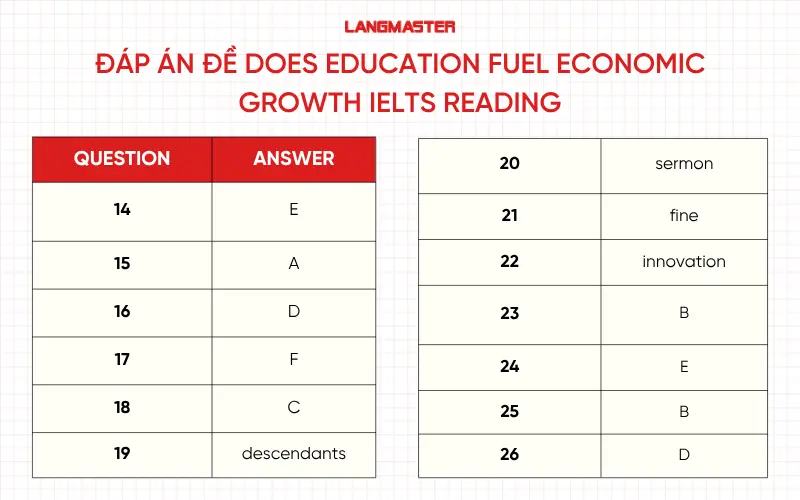
14. an explanation of the need for research to focus on individuals with a fairly consistent income (giải thích lý do cần tập trung nghiên cứu những người có mức thu nhập tương đối ổn định)
Đáp án: E
Thông tin đoạn E: “One way to look at whether education causes economic growth is to ‘hold wealth constant’. This involves following the lives of different people with the same level of wealth over a period of time. If wealth is constant, it is possible to discover whether education was, for example, linked to the cultivation of new crops, or to the adoption of industrial innovations...”
Giải thích: Tác giả nói về phương pháp “hold wealth constant” – tức là giữ mức giàu có (thu nhập/tài sản) ổn định để xem liệu yếu tố giáo dục có ảnh hưởng độc lập đến tăng trưởng kinh tế hay không. Điều này chính là nghiên cứu trên những người có thu nhập tương đối ổn định.
15. examples of the sources the database has been compiled from (các ví dụ về nguồn dữ liệu được dùng để biên soạn cơ sở dữ liệu)
Đáp án: A
Thông tin trong đoạn A: “It includes court records, guild ledgers, parish registers, village censuses, tax lists and – the most recent addition – 9,000 handwritten inventories…”
Giải thích: Đoạn A liệt kê hàng loạt nguồn dữ liệu mà nhóm của Ogilvie đã dùng để tạo nên cơ sở dữ liệu lớn – chính là yêu cầu của câu hỏi.
16. an account of one individual’s refusal to obey an order (câu chuyện về một cá nhân từ chối tuân theo mệnh lệnh)
Đáp án: D
Thông tin đoạn D: “Juliana Schweickherdt... was reprimanded in 1752... for ‘weaving cloth and combing wool, counter to the guild ordinance’. When Juliana continued taking jobs reserved for male guild members, she was summoned before the guild court and told to pay a fine…”
Giải thích: Người phụ nữ tên Juliana Schweickherdt đã không tuân theo lệnh của hội nghề (guild), tiếp tục làm công việc bị cấm. Đây chính là ví dụ về một cá nhân từ chối tuân lệnh.
17. a reference to a region being particularly suited to research into the link between education and economic growth (đề cập tới việc một khu vực đặc biệt phù hợp cho nghiên cứu mối liên hệ giữa giáo dục và tăng trưởng kinh tế)
Đáp án: F
Thông tin đoạn F: “German-speaking central Europe is an excellent laboratory for testing theories of economic growth,” she explains.
Giải thích: Ở đây, Ogilvie nói rõ rằng khu vực Trung Âu nói tiếng Đức là một “phòng thí nghiệm tuyệt vời” cho việc nghiên cứu mối liên hệ giữa giáo dục và tăng trưởng kinh tế → chính là “region being particularly suited to research”.
18. examples of the items included in a list of personal possessions (các ví dụ về đồ vật cá nhân trong danh mục tài sản)
Đáp án: C
Thông tin đoạn C: “From badger skins to Bibles, sewing machines to scarlet bodices – the villagers’ entire worldly goods are included.”
Giải thích: Đoạn C đưa ví dụ cụ thể về các món đồ trong danh sách tài sản cá nhân (inventories) như da lửng, Kinh thánh, máy khâu, áo đỏ – đúng yêu cầu câu hỏi.
19. Đáp án: descendants
Thông tin đoạn D: “We can follow the same people – and their descendants – across 300 years of educational and economic change.”
Giải thích: Từ cần điền chỉ những người con cháu, hậu duệ của các cá nhân được nghiên cứu.
20. Đáp án: sermon
Thông tin đoạn D: “... were chastised in 1707 for reading books in church instead of listening to the sermon.”
Giải thích: Hai cô gái bị khiển trách vì đọc sách trong nhà thờ thay vì nghe bài giảng (sermon).
21. Đáp án: fine
Thông tin đoạn D: “... she was summoned before the guild court and told to pay a fine equivalent to one third of a servant’s annual wage.”
Giải thích: Cô Juliana bị phạt nộp một khoản tiền phạt (fine).
22. Đáp án: innovation
Thông tin đoạn D: “The dominance of guilds not only prevented people from using their skills, but also held back even the simplest industrial innovation.”
Giải thích: Câu nói rõ: guilds ngăn cản việc phát triển các đổi mới công nghiệp.
23 - 24. Đáp án: B - E
Giải thích:
A. Very little research has been done into the link between high literacy rates and improved earnings. => Đoạn này không nói về “research into earnings” mà nói về economic growth and industrialisation, không phải thu nhập cá nhân. => SAI
B. Literacy rates in Germany between 1600 and 1900 were very good. => Đây là thông tin rõ ràng trong đoạn => ĐÚNG
C. There is strong evidence that high literacy rates in the modern world result in economic growth. => Ngược lại, đoạn nói rằng modern cross-country analyses have struggled to find evidence that education causes economic growth.=> Không có bằng chứng mạnh mẽ => SAI.
D. England is a good example of how high literacy rates helped a country industrialise. => “England had only mediocre literacy rates, yet its economy grew fast and it was the first to industrialise.”
→ Nghĩa là England công nghiệp hóa dù không có tỷ lệ biết chữ cao. => SAI
E. Economic growth can help to improve literacy rates.
→ Tăng trưởng kinh tế giúp cải thiện giáo dục → bao gồm literacy rates. => ĐÚNG
25 - 26: B - D
Giải thích:
A. They helped young people to learn a skill. => Không có chi tiết nào trong đoạn F nói rằng guilds giúp người trẻ học nghề. Ngược lại, họ ngăn cản cơ hội việc làm.
=> SAI
B. They were opposed to people moving to an area for work.
“Guilds blocked labor migration …”
→ Nghĩa là họ phản đối việc di cư lao động, không muốn người khác đến làm việc. => ĐÚNG
C. They kept better records than guilds in other parts of the world.
=> Không có chi tiết nào nói về việc guilds ở Trung Âu ghi chép tốt hơn nơi khác. => SAI
D. They opposed practices that threatened their control over a trade.
“... legislated against anything that undermined their monopolies.” → Nghĩa là họ phản đối các hoạt động đe dọa sự độc quyền hoặc quyền kiểm soát nghề nghiệp của mình.
=> ĐÚNG
E. They predominantly consisted of wealthy merchants.
Đoạn có nhắc tới “merchant associations” nhưng không nói rằng guilds chủ yếu gồm giới thương nhân giàu có. => SAI
>> Xem thêm: Giải đề IELTS Reading Left or Right [FULL ANSWER]
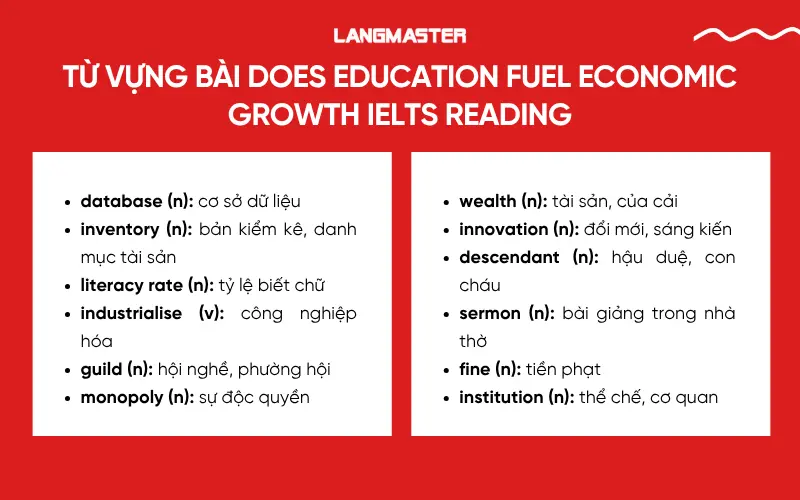
Bài đọc “Does Education Fuel Economic Growth?” xoay quanh mối quan hệ giữa giáo dục, năng suất lao động và tăng trưởng kinh tế. Để hiểu sâu và trả lời đúng các câu hỏi trong bài, bạn cần nắm vững những từ vựng học thuật (academic vocabulary) quan trọng dưới đây. Những từ này thường xuyên xuất hiện trong các bài IELTS Reading chủ đề Education & Economics.
>> Xem thêm: Top Website luyện IELTS Reading miễn phí tốt nhất, đạt band cao
Nếu bạn đang tìm kiếm một khóa học IELTS online uy tín và chất lượng, giúp bạn chinh phục các bài đọc khó như “Does Education Fuel Economic Growth – IELTS Reading”, thì khóa học IELTS tại Langmaster chính là lựa chọn đáng tin cậy nhất. Với hơn 16 năm kinh nghiệm trong dạy tiếng Anh, Langmaster được đánh giá là trung tâm luyện thi IELTS online uy tín và tốt nhất, đặc biệt phù hợp cho người mới bắt đầu hoặc người mất gốc tiếng Anh.
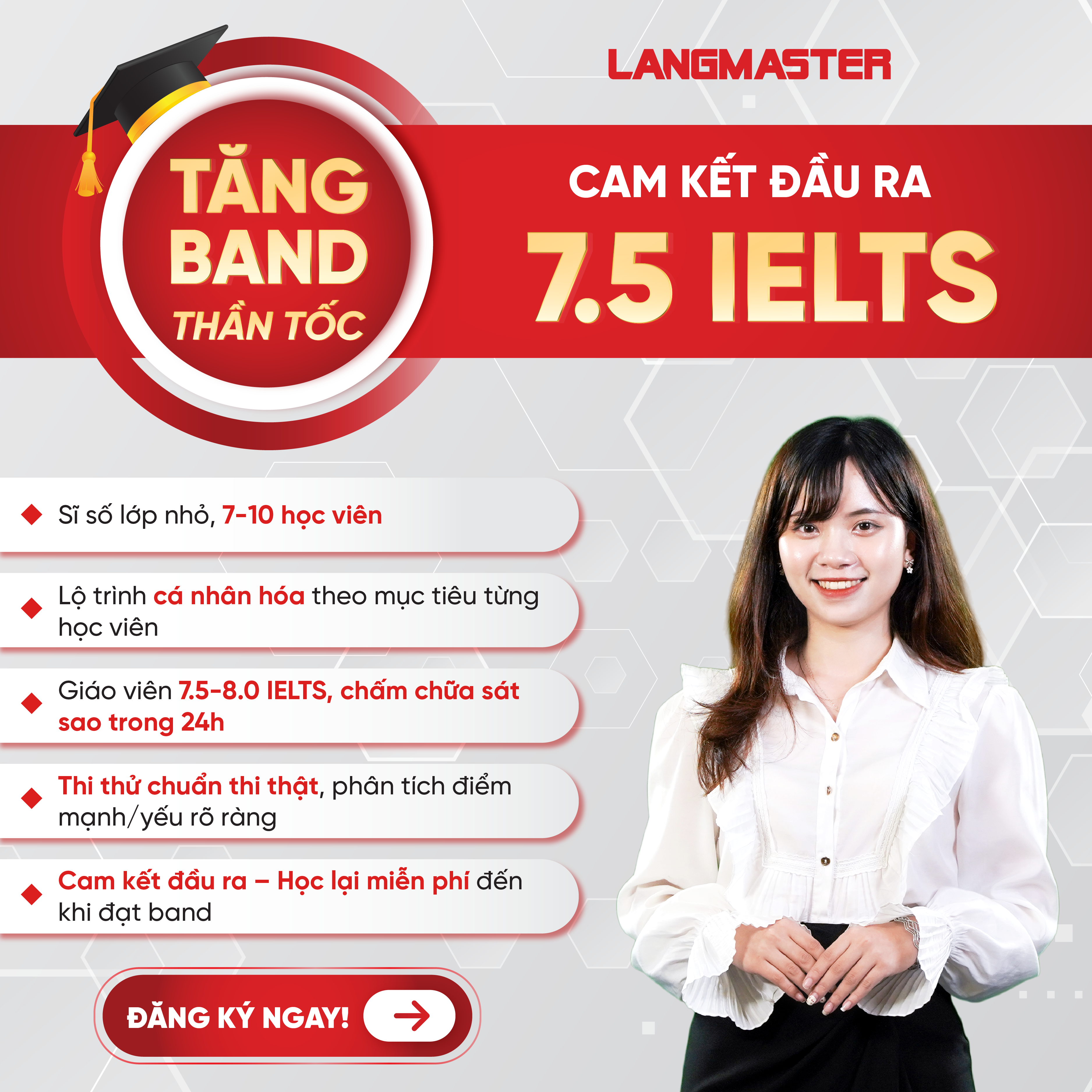
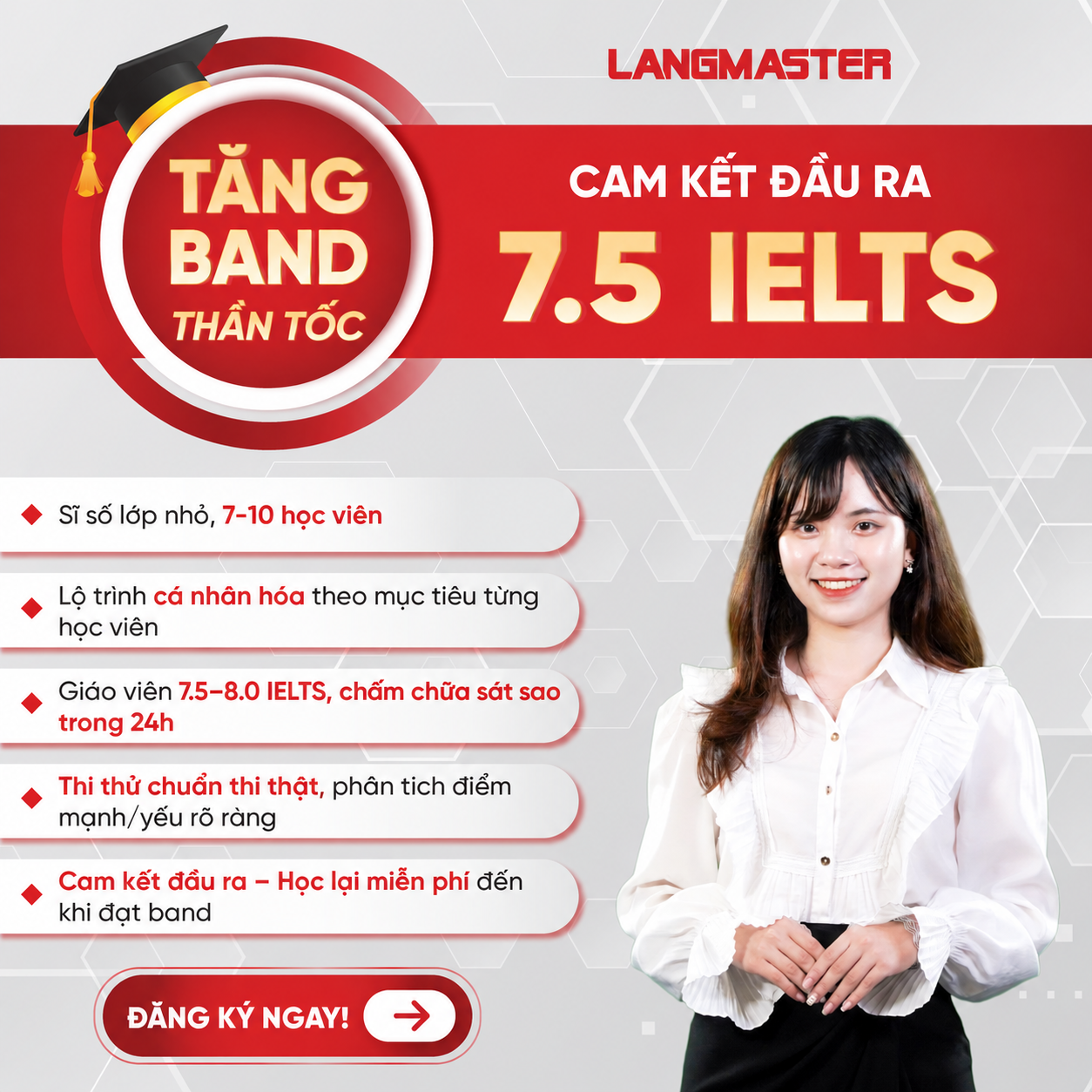
Điểm mạnh nổi bật của khóa IELTS online tại Langmaster nằm ở lớp học quy mô nhỏ (7–10 học viên), giúp mỗi học viên nhận được sự hướng dẫn cá nhân hóa từ giáo viên. Trong mỗi buổi học, bạn được tương tác trực tiếp, hỏi đáp ngay tại lớp và nhận phản hồi chi tiết, sửa lỗi kịp thời – điều mà ít trung tâm khác có thể đảm bảo.
Đội ngũ giáo viên tại Langmaster đều đạt IELTS 7.5+, được đào tạo bài bản về phương pháp sư phạm hiện đại. Họ không chỉ dạy kiến thức mà còn theo sát lộ trình học cá nhân, sửa bài trong vòng 24 giờ và giúp bạn nhận diện điểm yếu trong từng kỹ năng Reading, Listening, Speaking, Writing để tối ưu hiệu quả luyện thi.
Trước khi bắt đầu khóa học, bạn sẽ làm bài kiểm tra đánh giá năng lực 4 kỹ năng để xác định trình độ hiện tại. Từ đó, Langmaster thiết kế lộ trình học cá nhân hóa, phù hợp với mục tiêu band điểm riêng của bạn. Mỗi tháng, học viên nhận báo cáo tiến độ chi tiết cùng nhận xét và định hướng học tập từ giảng viên.
Đặc biệt, Langmaster cam kết đầu ra bằng văn bản. Nếu bạn chưa đạt band điểm như mong muốn, được học lại hoàn toàn miễn phí cho đến khi đạt mục tiêu. Nhờ vậy, dù học online, bạn vẫn được đảm bảo chất lượng tương đương, thậm chí vượt trội so với học offline.
Không chỉ vậy, học viên còn được tham gia coaching 1-1 cùng chuyên gia IELTS, luyện phát âm, nói tự nhiên và áp dụng chiến lược làm bài hiệu quả cho từng dạng đề
Langmaster – Trung tâm luyện thi IELTS online uy tín và tốt nhất, hiện đang có chương trình học thử miễn phí. Hãy đăng ký ngay hôm nay để trải nghiệm môi trường học chuyên nghiệp, tương tác cao và hiệu quả vượt mong đợi!


![Giải đề thi European Heat Wave IELTS Reading [FULL ANSWER]](https://langmaster.edu.vn/storage/uploads/original/2025/11/20/european-heat-wave-ielts-reading-answers.png)
Tổng hợp đề thi European Heat Wave IELTS Reading Answers kèm phân tích chi tiết, từ vựng và đáp án giúp bạn tối ưu điểm Reading nhanh chóng.
![Đề thi IELTS Reading có đáp án mới nhất 2025-2026 [Cập nhật liên tục]](https://langmaster.edu.vn/storage/uploads/original/2025/12/25/de-thi-ielts-reading.png)
Đề thi IELTS Reading có đáp án mới nhất 2025/2026, cập nhật liên tục đề thi thật và Cambridge, kèm lời giải chi tiết giúp nâng band hiệu quả.
Bài viết tổng hợp chi tiết đề thi IELTS Reading Holidays with a difference, đáp án kèm giải thích chi tiết, từ vựng cần lưu ý khi làm bài giúp bạn luyện thi hiệu quả và nâng cao band điểm.
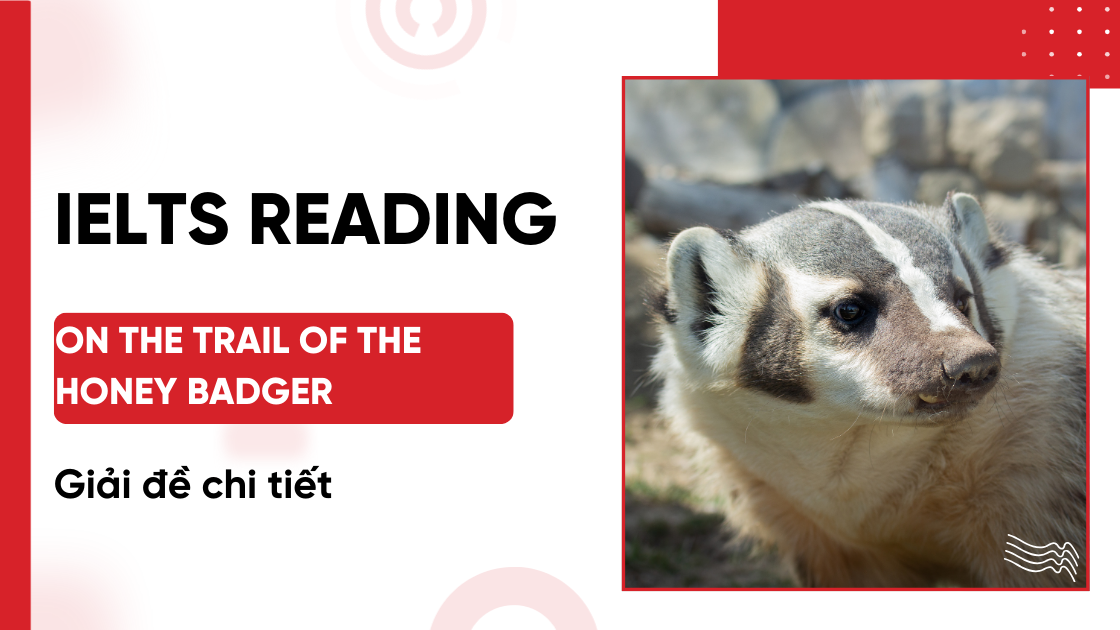
Bài viết tổng hợp chi tiết đề thi IELTS Reading on the trail of the honey badger, đáp án kèm giải thích chi tiết, từ vựng cần lưu ý khi làm bài giúp bạn luyện thi hiệu quả và nâng cao band điểm.
![Giải đề IELTS Reading Growing more for less [FULL ANSWER]](https://langmaster.edu.vn/storage/uploads/original/2025/10/22/growing-more-for-less-ielts-reading-answers.png)
Khám phá bài đọc Growing more for less IELTS Reading: Tổng hợp đáp án, từ vựng quan trọng và phân tích chi tiết giúp bạn hiểu cách công nghệ vệ tinh hỗ trợ nông nghiệp hiện đại




Hơn 16 năm kinh nghiệm, đào tạo thành công hàng trăm nghìn học viên
Phương pháp giảng dạy hiện đại, học viên tiến bộ rõ rệt
Lộ trình học chuẩn quốc tế, phù hợp với nhu cầu thực tiễn
Giáo viên đạt chuẩn Quốc tế với chất lượng top đầu thị trường, giàu kinh nghiệm
Học online linh hoạt, cam kết đầu ra bằng văn bản




.png)