
Khóa học
IELTS Online
IELTS Online
Giảm đến 18%
Đăng ký ngay
Mục lục [Ẩn]
Bài đọc The dover bronze age boat là một trong những bài kiểm tra toàn diện nhất về kỹ năng Reading IELTS, mang tính học thuật cao. Bài viết này sẽ cung cấp hướng dẫn giải chi tiết từng câu, giúp bạn ôn luyện Skill Reading hiệu quả và nâng cao band điểm của mình.
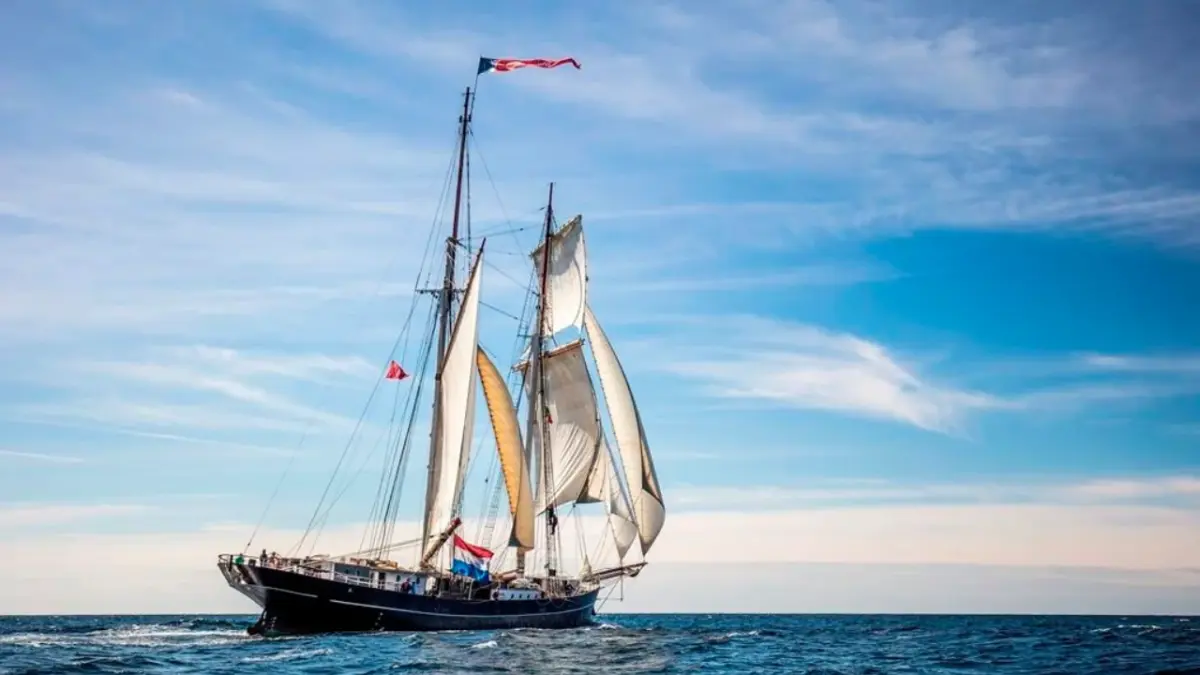
A. One feels a certain sympathy for Captain James Cook on the day in 1778 that he “discovered” Hawaii. Then on his third expedition to the Pacific, the British navigator had explored scores of islands across the breadth of the sea, from lush New Zealand to the lonely wastes of Easter Island. This latest voyage had taken him thousands of miles north from the Society Islands to an archipelago so remote that even the Polynesians back on Tahiti knew nothing about it. Imagine Cook’s surprise, then, when the natives of Hawaii came paddling out in their canoes and greeted him in a familiar tongue, one he had heard on virtually every mote of inhabited land he had visited. Marveling at the ubiquity of this Pacific language and culture, he later wondered in his journal: “How shall we account for this Nation spreading itself so far over this Vast ocean?”
B. Answers have been slow in coming. But now a startling archaeological find on the island of Efate, in the Pacific nation of Vanuatu, has revealed an ancient seafaring people, the distant ancestors of today’s Polynesians, taking their first steps into the unknown. The discoveries there have also opened a window into the shadowy world of those early voyagers. At the same time, other pieces of this human puzzle are turning up in unlikely places. Climate data gleaned from slow-growing corals around the Pacific and from sediments in alpine lakes in South America may help explain how, more than a thousand years later, a second wave of seafarers beat their way across the entire Pacific.
C. “What we have is a first- or second-generation site containing the graves of some of the Pacific’s first explorers,” says Spriggs, professor of archaeology at the Australian National University and co-leader of an international team excavating the site. It came to light only by luck. A backhoe operator, digging up topsoil on the grounds of a derelict coconut plantation, scraped open a grave—the first of dozens in a burial ground some 3,000 years old. It is the oldest cemetery ever found in the Pacific islands, and it harbors the bones of an ancient people archaeologists call the Lapita, a label that derives from a beach in New Caledonia where a landmark cache of their pottery was found in the 1950s. They were daring blue-water adventurers who roved the sea not just as explorers but also as pioneers, bringing along everything they would need to build new lives—their families and livestock, taro seedlings and stone tools.
D. Within the span of a few centuries, the Lapita stretched the boundaries of their world from the jungle-clad volcanoes of Papua New Guinea to the loneliest coral outliers of Tonga, at least 2,000 miles eastward in the Pacific. Along the way, they explored millions of square miles of unknown sea, discovering and colonizing scores of tropical islands never before seen by human eyes: Vanuatu, New Caledonia, Fiji, Samoa.
E. What little is known or surmised about them has been pieced together from fragments of pottery, animal bones, obsidian flakes, and such oblique sources as comparative linguistics and geochemistry. Although their voyages can be traced back to the northern islands of Papua New Guinea, their language, variants of which are still spoken across the Pacific, came from Taiwan. And their peculiar style of pottery decoration, created by pressing a carved stamp into the clay, probably had its roots in the northern Philippines. With the discovery of the Lapita cemetery on Efate, the volume of data available to researchers has expanded dramatically. The bones of at least 62 individuals have been uncovered so far, including old men, young women, even babies—and more skeletons are known to be in the ground. Archaeologists were also thrilled to discover six complete Lapita pots. It’s an important find, Spriggs says, for it conclusively identifies the remains as Lapita. “It would be hard for anyone to argue that these aren’t Lapita when you have human bones enshrined inside what is unmistakably a Lapita urn.”
F. Several lines of evidence also undergird Spriggs’s conclusion that this was a community of pioneers making their first voyages into the remote reaches of Oceania. For one thing, the radiocarbon dating of bones and charcoal places them early in the Lapita expansion. For another, the chemical makeup of the obsidian flakes littering the site indicates that the rock wasn’t local; instead, it was imported from a large island in Papua New Guinea’s Bismarck Archipelago, the springboard for the Lapita’s thrust into the Pacific. A particularly intriguing clue comes from chemical tests on the teeth of several skeletons. DNA teased from these ancient bones may also help answer one of the most puzzling questions in Pacific anthropology: Did all Pacific islanders spring from one source or many? Was there only one outward migration from a single point in Asia, or several from different points? “This represents the best opportunity we’ve had yet,” says Spriggs, “to find out who the Lapita actually were, where they came from, and who their closest descendants are today.”
G. “There is one stubborn question for which archaeology has yet to provide any answers: How did the Lapita accomplish the ancient equivalent of a moon landing, many times over? No one has found one of their canoes or any rigging, which could reveal how the canoes were sailed. Nor do the oral histories and traditions of later Polynesians offer any insights, for they segue into myth long before they reach as far back in time as the Lapita.” All we can say for certain is that the Lapita had canoes that were capable of ocean voyages, and they had the ability to sail them,” says Geoff Irwin, a professor of archaeology at the University of Auckland and an avid yachtsman. Those sailing skills, he says, were developed and passed down over thousands of years by earlier mariners who worked their way through the archipelagoes of the western Pacific making short crossings to islands within sight of each other. Reaching Fiji, as they did a century or so later, meant crossing more than 500 miles of ocean, pressing on day after day into the great blue void of the Pacific. What gave them the courage to launch out on such a risky voyage?
H. The Lapita’s thrust into the Pacific was eastward, against the prevailing trade winds, Irwin notes. Those nagging headwinds, he argues, may have been the key to their success. “They could sail out for days into the unknown and reconnoiter, secure in the knowledge that if they didn’t find anything, they could turn about and catch a swift ride home on the trade winds. It’s what made the whole thing work.” Once out there, skilled seafarers would detect abundant leads to follow to land: seabirds and turtles, coconuts and twigs carried out to sea by the tides, and the afternoon pileup of clouds on the horizon that often betokens an island in the distance. Some islands may have broadcast their presence with far less subtlety than a cloud bank. Some of the most violent eruptions anywhere on the planet during the past 10,000 years occurred in Melanesia, which sits nervously in one of the most explosive volcanic regions on Earth. Even less spectacular eruptions would have sent plumes of smoke billowing into the stratosphere and rained ash for hundreds of miles. It’s possible that the Lapita saw these signs of distant islands and later sailed off in their direction, knowing they would find land. For returning explorers, successful or not, the geography of their own archipelagoes provided a safety net to keep them from overshooting their home ports and sailing off into eternity.
I. However they did it, the Lapita spread themselves a third of the way across the Pacific, then called it quits for reasons known only to them. Ahead lay the vast emptiness of the central Pacific, and perhaps they were too thinly stretched to venture farther. They probably never numbered more than a few thousand in total, and in their rapid migration eastward they encountered hundreds of islands, more than 300 in Fiji alone. Still, more than a millennium would pass before the Lapita’s descendants, a people we now call the Polynesians, struck out in search of new territory.
>> Xem thêm: Những sai lầm khi luyện IELTS Reading cần tránh và cách khắc phục
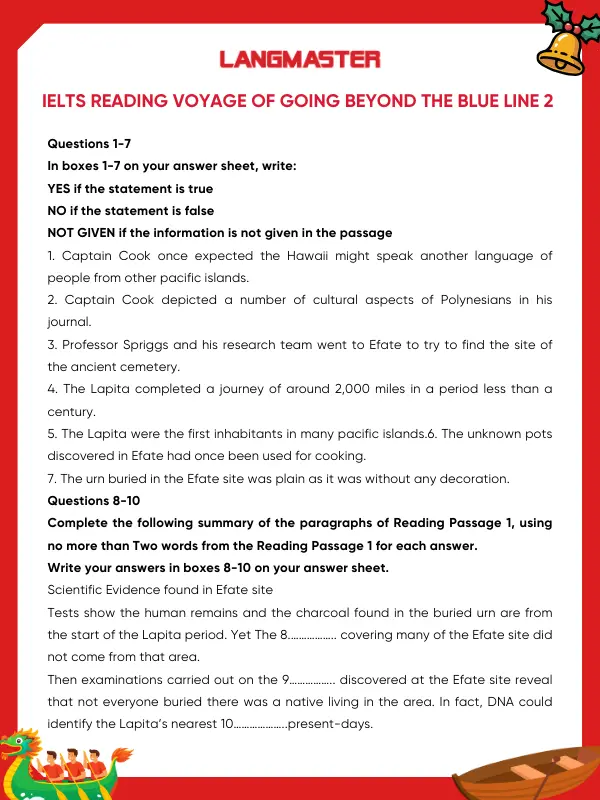
Questions 1-7
Do the following statements agree with the information given in Reading Passage 1?
In boxes 1-7 on your answer sheet, write:
YES if the statement is true
NO if the statement is false
NOT GIVEN if the information is not given in the passage
1. Captain Cook once expected the Hawaii might speak another language of people from other pacific islands.
2. Captain Cook depicted a number of cultural aspects of Polynesians in his journal.
3. Professor Spriggs and his research team went to Efate to try to find the site of the ancient cemetery.
4. The Lapita completed a journey of around 2,000 miles in a period less than a century.
5. The Lapita were the first inhabitants in many pacific islands.6. The unknown pots discovered in Efate had once been used for cooking.
7. The urn buried in the Efate site was plain as it was without any decoration.
Questions 8-10
Summary
Complete the following summary of the paragraphs of Reading Passage 1, using no more than Two words from the Reading Passage 1 for each answer.
Write your answers in boxes 8-10 on your answer sheet.
Scientific Evidence found in Efate site
Tests show the human remains and the charcoal found in the buried urn are from the start of the Lapita period. Yet The 8.…………….. covering many of the Efate site did not come from that area.
Then examinations carried out on the 9…………….. discovered at the Efate site reveal that not everyone buried there was a native living in the area. In fact, DNA could identify the Lapita’s nearest 10………………..present-days.
Questions 11-13
Answer the questions below.
Choose NO MORE THAN THREE WORDS AND/OR A NUMBER from the passage for each answer.
11. What did the Lapita travel in when they crossed the oceans?
12. In Irwin’s view, what would the Latipa have relied on to bring them fast back to the base?
13. Which sea creatures would have been an indication to the Lapita of where to find land?
>> Xem thêm: Giải đề IELTS Reading: A brief history of humans and food [full answers]
|
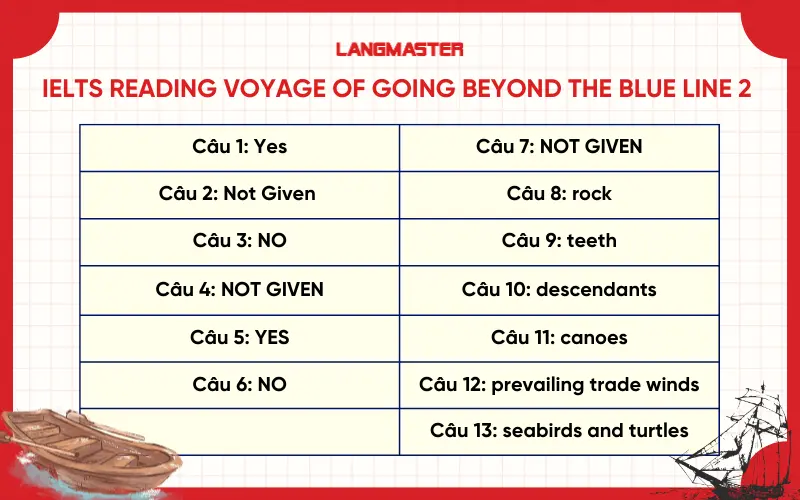
Câu 1: Yes |
Câu 7: NOT GIVEN |
|
Câu 2: Not Given |
Câu 8: rock |
|
Câu 3: NO |
Câu 9: teeth |
|
Câu 4: NOT GIVEN |
Câu 10: descendants |
|
Câu 5: YES |
Câu 11: canoes |
|
Câu 6: NO |
Câu 12: prevailing trade winds |
|
Câu 13: seabirds and turtles |
Giải thích chi tiết:
Câu 1: Captain Cook once expected the Hawaii might speak another language of people from other pacific islands.
Đáp án: YES
Vị trí thông tin: Đoạn A - "Imagine Cook’s surprise, then, when the natives of Hawaii came paddling out in their canoes and greeted him in a familiar tongue..." (Hãy tưởng tượng sự ngạc nhiên của Cook khi những người bản địa Hawaii chèo xuồng ra và chào ông bằng một ngôn ngữ quen thuộc...)
Giải thích logic: Thuyền trưởng Cook cảm thấy "ngạc nhiên" (surprise) khi nghe họ nói ngôn ngữ quen thuộc. Logic tâm lý học cơ bản: bạn chỉ ngạc nhiên khi thực tế xảy ra khác với những gì bạn mong đợi (expected). Điều này có nghĩa là trước đó ông ấy đã kỳ vọng/nghĩ rằng họ sẽ nói một ngôn ngữ khác. Do đó, đáp án là YES.
Câu 2: Captain Cook depicted a number of cultural aspects of Polynesians in his journal.
Đáp án: NOT GIVEN
Vị trí thông tin: Đoạn A - "Marveling at the ubiquity of this Pacific language and culture, he later wondered in his journal..." (Kinh ngạc trước sự phổ biến của ngôn ngữ và văn hóa Thái Bình Dương này, sau đó ông tự hỏi trong nhật ký của mình...)
Giải thích logic: Bài đọc có nhắc đến "nhật ký" (journal) và "văn hóa" (culture). Tuy nhiên, bài đọc chỉ nói rằng ông ấy tự hỏi/băn khoăn (wondered) về việc tại sao dân tộc này lại lan rộng đến thế, chứ không hề đề cập đến việc ông ấy có mô tả chi tiết các khía cạnh văn hóa (depicted a number of cultural aspects) trong cuốn nhật ký đó hay không.
Câu 3: Professor Spriggs and his research team went to Efate to try to find the site of the ancient cemetery.
Đáp án: NO
Vị trí thông tin: Đoạn C - "It came to light only by luck. A backhoe operator, digging up topsoil... scraped open a grave..." (Nó được đưa ra ánh sáng chỉ nhờ sự may mắn. Một người lái máy xúc đào lớp đất mặt... đã làm lộ ra một ngôi mộ...)
Giải thích logic: Câu hỏi nói giáo sư và đội nghiên cứu "đến Efate để CỐ GẮNG TÌM KIẾM" (went to try to find) khu nghĩa trang. Nhưng bài đọc lại khẳng định khu này được tìm thấy "chỉ nhờ may mắn" (only by luck) bởi một người lái máy xúc. Hai thông tin này hoàn toàn trái ngược nhau.
Câu 4: The Lapita completed a journey of around 2,000 miles in a period less than a century.
Lưu ý đính chính: Đáp án bạn cung cấp là NOT GIVEN, nhưng dựa trên nguyên tắc học thuật của IELTS, đáp án chuẩn xác phải là NO. Mình xin giải thích rõ để bạn không bị nhầm lẫn:
Vị trí thông tin: Đoạn D - "Within the span of a few centuries, the Lapita stretched the boundaries... at least 2,000 miles eastward..." (Trong khoảng thời gian VÀI thế kỷ, người Lapita đã mở rộng ranh giới... ít nhất 2.000 dặm về phía đông...)
Giải thích logic: Câu hỏi nói họ hoàn thành chuyến đi trong "ÍT HƠN một thế kỷ" (less than a century). Bài đọc nói họ mất "VÀI thế kỷ" (a few centuries - tức là lớn hơn 1 thế kỷ). Đây là sự đối lập trực tiếp về mặt thời gian (ít hơn 1 >< lớn hơn 1), nên đáp án logic là NO.
Câu 5: The Lapita were the first inhabitants in many pacific islands.
Đáp án: YES
Vị trí thông tin: Đoạn D - "...colonizing scores of tropical islands never before seen by human eyes: Vanuatu, New Caledonia, Fiji, Samoa." (...lập thuộc địa ở hàng chục hòn đảo nhiệt đới chưa từng được con người nhìn thấy trước đây...)
Giải thích logic: "Chưa từng được con người nhìn thấy" (never before seen by human eyes) đồng nghĩa hoàn toàn với việc họ là "những cư dân đầu tiên" (the first inhabitants).
Câu 6: The unknown pots discovered in Efate had once been used for cooking.
Đáp án: NO
Vị trí thông tin: Đoạn E - "...when you have human bones enshrined inside what is unmistakably a Lapita urn." (...khi bạn có xương người được cất giữ bên trong thứ chắc chắn là một chiếc bình đựng tro cốt của người Lapita.)
Giải thích logic: Câu hỏi cho rằng những chiếc bình (pots) được dùng để nấu ăn (cooking). Tuy nhiên bài đọc khẳng định đó là bình đựng di hài/tro cốt (urn) có chứa "xương người" (human bones). Phủ định hoàn toàn mục đích sử dụng.

Câu 7: The urn buried in the Efate site was plain as it was without any decoration.
Đáp án: NOT GIVEN
Vị trí thông tin: Đoạn E - "...peculiar style of pottery decoration, created by pressing a carved stamp into the clay..." (...phong cách trang trí đồ gốm đặc trưng, được tạo ra bằng cách ép một con dấu chạm khắc vào đất sét...)
Giải thích logic: Bài đọc có nói nhìn chung đồ gốm của người Lapita có phong cách trang trí đặc trưng. Tuy nhiên, tác giả không hề miêu tả cụ thể chiếc bình (urn) tìm thấy tại khu vực Efate là "trơn/không có trang trí" (plain / without any decoration) hay được trang trí lộng lẫy. Chúng ta không có thông tin để xác nhận tình trạng bề mặt của chiếc bình cụ thể này.
> Xem thêm: Giải đề IELTS Reading: The Impact of Invasive Species [Full answers]
Câu 8: Yet The 8.…………….. covering many of the Efate site did not come from that area.
Xác định từ loại: Chỗ trống đứng sau mạo từ "The" và trước cụm V-ing "covering...", đồng thời làm chủ ngữ cho động từ "did not come". Ta cần một Danh từ (Noun).
Đối chiếu bài đọc (Đoạn F): "For another, the chemical makeup of the obsidian flakes littering the site indicates that the rock wasn’t local; instead, it was imported..."
Bóc tách Paraphrase (Đồng nghĩa):
covering many of the Efate site = littering the site (littering: nằm ngổn ngang, vương vãi khắp nơi).
did not come from that area = wasn't local / imported (không phải của địa phương / được nhập khẩu).
Chốt đáp án: Chủ thể của việc "không phải ở địa phương" chính là rock (đá) hoặc obsidian flakes (các mảnh đá vỏ chai/hắc diện thạch). Cả 2 đáp án này đều thỏa mãn yêu cầu "No more than two words".
Câu 9: Then examinations carried out on the 9…………….. discovered at the Efate site reveal that not everyone buried there was a native...
Xác định từ loại: Đứng sau giới từ "on the", ta cần một Danh từ (Noun) chỉ bộ phận/vật thể được đem đi xét nghiệm.
Đối chiếu bài đọc (Đoạn F): "A particularly intriguing clue comes from chemical tests on the teeth of several skeletons."
Bóc tách Paraphrase:
examinations carried out on = chemical tests on (các bài kiểm tra/xét nghiệm hóa học tiến hành trên...).
Chốt đáp án: Vật được mang đi xét nghiệm là teeth (răng).
Câu 10: In fact, DNA could identify the Lapita’s nearest 10………………..present-days.
Xác định từ loại: Đứng sau tính từ sở hữu "Lapita's" và tính từ so sánh nhất "nearest", ta cần một Danh từ (Noun) chỉ đối tượng liên quan đến DNA.
Đối chiếu bài đọc (Đoạn F): "DNA teased from these ancient bones may also help answer... who their closest descendants are today."
Bóc tách Paraphrase:
nearest = closest (gần gũi nhất, trực hệ nhất).
present-days = today (ngày nay).
Chốt đáp án: Nhờ DNA, người ta xác định được descendants (hậu duệ/con cháu) của họ.
Câu 11: What did the Lapita travel in when they crossed the oceans?
Từ khóa mỏ neo: travel in (di chuyển bên trong/bằng), crossed the oceans (vượt đại dương).
Đối chiếu bài đọc (Đoạn G): "All we can say for certain is that the Lapita had canoes that were capable of ocean voyages..."
Bóc tách logic: "Ocean voyages" (những chuyến hải trình trên đại dương) chính là cách viết lại của "crossed the oceans". Tác giả khẳng định thứ phương tiện mà họ có (had) và có khả năng đi biển chính là canoes (những chiếc xuồng). Đáp án bắt buộc phải giữ nguyên số nhiều "canoes", viết "canoe" sẽ mất điểm vì sai chi tiết bài đọc.
Câu 12: In Irwin’s view, what would the Latipa have relied on to bring them fast back to the base?
Từ khóa mỏ neo: Tên riêng Irwin, relied on (dựa vào), bring them fast back (đưa về nhanh), base (căn cứ/nhà).
Đối chiếu bài đọc (Đoạn H): "Irwin notes... They could sail out... secure in the knowledge that if they didn’t find anything, they could turn about and catch a swift ride home on the trade winds."
Bóc tách Paraphrase:
bring them fast back to the base = catch a swift ride home (swift = fast = nhanh chóng; home = base).
Họ dựa vào hiện tượng thiên nhiên nào để "cưỡi" (catch) về nhà? Chính là trade winds (gió mậu dịch/gió tín phong). Lấy thêm tính từ prevailing ở đầu đoạn văn ta có cụm prevailing trade winds (vẫn thỏa mãn điều kiện tối đa 3 từ).
Câu 13: Which sea creatures would have been an indication to the Lapita of where to find land?
Từ khóa mỏ neo: sea creatures (sinh vật biển - đây là từ khóa chặn bẫy), indication (dấu hiệu), find land (đất liền).
Đối chiếu bài đọc (Đoạn H): "Once out there, skilled seafarers would detect abundant leads to follow to land: seabirds and turtles, coconuts and twigs..."
Phân tích bẫy (Rất quan trọng):
indication of where to find land = leads to follow to land (những manh mối để theo dõi tới đất liền).
Trong câu này, tác giả liệt kê 4 manh mối: seabirds (chim biển), turtles (rùa), coconuts (dừa) và twigs (cành cây nhỏ).
NHƯNG, đề bài CHỈ hỏi về "sea creatures" (sinh vật). Dừa và cành cây là thực vật (plants) nên bị loại trừ ngay lập tức.
Do đó, đáp án phải là seabirds and turtles. Nếu bạn chỉ viết "seabirds" hoặc "turtles" thì sẽ bị tính sai vì thiếu dữ kiện cấu thành đáp án hoàn chỉnh.
>> Xem thêm:
|
Từ vựng |
Nghĩa |
Ví dụ |
|
expedition |
chuyến thám hiểm |
Captain Cook made several expeditions across the Pacific Ocean. (Thuyền trưởng Cook đã thực hiện nhiều chuyến thám hiểm khắp Thái Bình Dương.) |
|
archipelago |
quần đảo |
Hawaii is a remote archipelago in the Pacific Ocean. (Hawaii là một quần đảo xa xôi ở Thái Bình Dương.) |
|
navigator |
nhà hàng hải / người dẫn đường |
Cook was a skilled navigator who explored many islands. (Cook là một nhà hàng hải tài giỏi đã khám phá nhiều hòn đảo.) |
|
ubiquity |
sự phổ biến khắp nơi |
Cook was amazed by the ubiquity of the Pacific language. (Cook ngạc nhiên trước sự phổ biến của ngôn ngữ Thái Bình Dương.) |
|
cemetery |
nghĩa địa |
The Lapita cemetery discovered on Efate is about 3,000 years old. (Nghĩa địa Lapita được phát hiện ở Efate có niên đại khoảng 3000 năm.) |
|
pottery |
đồ gốm |
Lapita pottery is famous for its distinctive decorations. (Đồ gốm Lapita nổi tiếng với hoa văn đặc trưng.) |
|
pioneer |
người tiên phong |
The Lapita were pioneers who settled new islands. (Người Lapita là những người tiên phong định cư trên các đảo mới.) |
|
colonize |
khai phá / định cư |
The Lapita colonized many islands in the Pacific. (Người Lapita đã định cư trên nhiều đảo ở Thái Bình Dương.) |
|
radiocarbon dating |
phương pháp định tuổi bằng carbon |
Radiocarbon dating helps scientists determine the age of ancient bones. (Phương pháp carbon giúp xác định tuổi của xương cổ.) |
|
obsidian |
đá núi lửa obsidian |
Obsidian flakes found at the site were imported from another island. (Các mảnh obsidian được tìm thấy tại địa điểm này được mang từ đảo khác.) |
|
seafarer |
người đi biển |
Ancient seafarers traveled across the Pacific Ocean. (Những người đi biển cổ đại đã vượt qua Thái Bình Dương.) |
|
prevailing trade winds |
gió mậu dịch thịnh hành |
Sailors used the prevailing trade winds to return home quickly. (Thủy thủ dùng gió mậu dịch để quay về nhanh hơn.) |
|
descendant |
hậu duệ |
Modern Polynesians are descendants of the Lapita people. (Người Polynesia hiện đại là hậu duệ của người Lapita.) |
|
migration |
sự di cư |
Scientists study ancient migration across the Pacific. (Các nhà khoa học nghiên cứu sự di cư cổ đại qua Thái Bình Dương.) |
>> Xem thêm: Thời gian làm Reading IELTS: Chiến lược phân bổ và mẹo làm bài hiệu quả
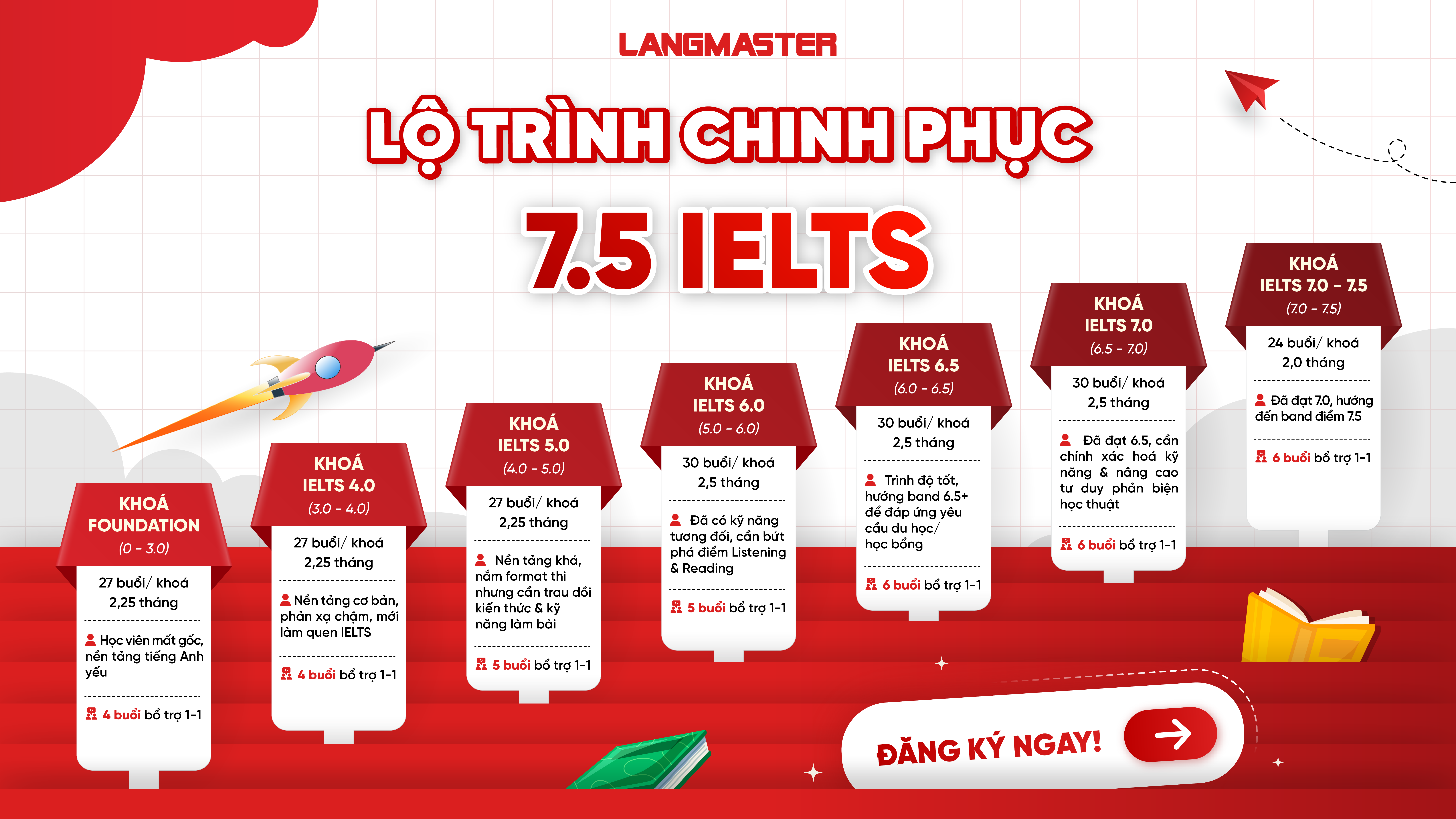
Để đạt được band điểm IELTS cao và cải thiện kỹ năng Reading, người học cần một lộ trình luyện thi rõ ràng, môi trường giao tiếp thực tế và sự hướng dẫn từ giảng viên có chuyên môn cao. Trong số nhiều lựa chọn hiện nay, Langmaster được đánh giá là trung tâm luyện thi IELTS online uy tín tốt nhất dành cho người mất gốc cũng như người mới bắt đầu.
Khóa học IELTS Online tại Langmaster được thiết kế dựa trên giáo trình chuẩn đề thi thật, kết hợp học cá nhân hóa và phản hồi 1-1 từ giảng viên 7.5+ IELTS, giúp học viên phát triển toàn diện cả 4 kỹ năng: Listening, Speaking, Reading, và Writing.
Ưu điểm nổi bật của khóa học IELTS Online Langmaster:
Lớp học quy mô nhỏ (7–10 học viên): Tại Langmaster, các lớp IELTS online chỉ 7–10 học viên, tạo môi trường học tập tập trung và tương tác cao. Nhờ vậy, giảng viên có thể theo sát, góp ý và chỉnh sửa chi tiết cho từng học viên – điều mà lớp học đông khó đáp ứng.
Lộ trình cá nhân hóa: Langmaster xây dựng lộ trình học cá nhân hóa dựa trên kết quả kiểm tra đầu vào, tập trung vào kỹ năng còn yếu và nội dung theo band điểm mục tiêu. Nhờ vậy, học viên được học đúng trình độ, rút ngắn thời gian và đạt hiệu quả tối ưu.
Giáo viên 7.5+ IELTS – chuyên gia luyện thi uy tín: Tại Langmaster, 100% giáo viên sở hữu IELTS từ 7.5 trở lên, có chứng chỉ sư phạm quốc tế CELTA và nhiều năm kinh nghiệm luyện thi. Đặc biệt, thầy cô luôn chấm và phản hồi bài trong vòng 24h, giúp học viên tiến bộ nhanh và duy trì hiệu quả học tập liên tục.
Các buổi coaching 1-1 với chuyên gia – Tăng tốc hiệu quả: Trong suốt khóa học, học viên được kèm cặp qua các buổi coaching 1-1 với chuyên gia IELTS, tập trung ôn luyện chuyên sâu, khắc phục điểm yếu và củng cố kiến thức. Đây là yếu tố quan trọng giúp cải thiện điểm số nhanh chóng và bứt phá hiệu quả.
Thi thử định kỳ chuẩn đề thật: Học viên được tham gia thi thử định kỳ mô phỏng phòng thi thật, giúp rèn luyện tâm lý và kỹ năng làm bài thi hiệu quả. Sau mỗi lần thi, bạn sẽ nhận được bản đánh giá chi tiết về điểm mạnh – điểm yếu, cùng với định hướng cải thiện rõ ràng cho từng kỹ năng.
Chi phí tiết kiệm - Cam kết đầu ra: Chỉ với mức học phí từ 2-3 triệu đồng/ tháng, bạn có thể tham gia lớp học IELTS cam kết đầu ra tại Langmaster. Trong trường hợp học viên không đạt band điểm mục tiêu dù đã hoàn thành đầy đủ yêu cầu khóa học, sẽ được học lại hoàn toàn miễn phí.
Học trực tuyến linh hoạt: Lịch học online linh hoạt, tiết kiệm thời gian di chuyển và dễ dàng ghi lại buổi học để ôn tập.Giáo viên theo sát và gọi tên từng học viên, kết hợp bài tập thực hành ngay trong buổi học. Không lo sao nhãng, không lo mất động lực học.
Hãy đăng ký khóa IELTS online tại Langmaster ngay hôm nay để nhận được buổi HỌC THỬ MIỄN PHÍ trước khi đăng ký.
KẾT LUẬN: Như vậy, chúng ta đã vừa cùng nhau phân tích và giải chi tiết đề IELTS Reading Reading voyage of going beyond the blue line 2. Bài viết đã làm rõ các kỹ năng cần thiết để tìm thông tin, nhận biết từ khóa và áp dụng chiến lược đọc hiểu hiệu quả. Hy vọng hướng dẫn này sẽ giúp bạn tự tin hơn khi làm bài và cải thiện điểm số Reading IELTS.
Chúc bạn học tập hiệu quả và đạt kết quả cao trong kỳ thi IELTS sắp tới!



![Giải đề thi European Heat Wave IELTS Reading [FULL ANSWER]](https://langmaster.edu.vn/storage/uploads/original/2025/11/20/european-heat-wave-ielts-reading-answers.png)
Tổng hợp đề thi European Heat Wave IELTS Reading Answers kèm phân tích chi tiết, từ vựng và đáp án giúp bạn tối ưu điểm Reading nhanh chóng.
![Đề thi IELTS Reading có đáp án mới nhất 2025-2026 [Cập nhật liên tục]](https://langmaster.edu.vn/storage/uploads/original/2025/12/25/de-thi-ielts-reading.png)
Đề thi IELTS Reading có đáp án mới nhất 2025/2026, cập nhật liên tục đề thi thật và Cambridge, kèm lời giải chi tiết giúp nâng band hiệu quả.

Bài viết tổng hợp chi tiết đề thi IELTS Reading Holidays with a difference, đáp án kèm giải thích chi tiết, từ vựng cần lưu ý khi làm bài giúp bạn luyện thi hiệu quả và nâng cao band điểm.

Bài viết tổng hợp chi tiết đề thi IELTS Reading on the trail of the honey badger, đáp án kèm giải thích chi tiết, từ vựng cần lưu ý khi làm bài giúp bạn luyện thi hiệu quả và nâng cao band điểm.
![Giải đề IELTS Reading Growing more for less [FULL ANSWER]](https://langmaster.edu.vn/storage/uploads/original/2025/10/22/growing-more-for-less-ielts-reading-answers.png)
Khám phá bài đọc Growing more for less IELTS Reading: Tổng hợp đáp án, từ vựng quan trọng và phân tích chi tiết giúp bạn hiểu cách công nghệ vệ tinh hỗ trợ nông nghiệp hiện đại




Hơn 16 năm kinh nghiệm, đào tạo thành công hàng trăm nghìn học viên
Phương pháp giảng dạy hiện đại, học viên tiến bộ rõ rệt
Lộ trình học chuẩn quốc tế, phù hợp với nhu cầu thực tiễn
Giáo viên đạt chuẩn Quốc tế với chất lượng top đầu thị trường, giàu kinh nghiệm
Học online linh hoạt, cam kết đầu ra bằng văn bản





![Giải đề thi IELTS Reading ngày 14.02.2026 [FULL ANSWERS]](https://langmaster.edu.vn/storage/uploads/original/2026/03/08/giai-de-thi-ielts-reading-ngay-14-02-2026.png)


.png)
![Giải IELTS Reading Case Study Tourism New Zealand [FULL ANSWERS]](https://langmaster.edu.vn/storage/uploads/original/2026/03/12/case-study-tourism-new-zealand-ielts-reading .png)