Khóa học
IELTS Online
IELTS Online
Giảm đến 18%
Đăng ký ngay
Mục lục [Ẩn]
Bài đọc The concept of intelligence là một trong những bài kiểm tra toàn diện nhất về kỹ năng Reading IELTS, mang tính học thuật cao. Bài viết này sẽ cung cấp hướng dẫn giải chi tiết từng câu, từ những câu hỏi Matching Information hóc búa đến các dạng Multiple Choice phức tạp, giúp bạn ôn luyện Skill Reading hiệu quả và nâng cao band điểm của mình.
The concept of intelligence
A. Looked at in one way, everyone knows what intelligence is; looked at in another way, no one does. In other words, people all have unconscious notions – known as ‘implicit theories’ – of intelligence, but no one knows for certain what it actually is. This chapter addresses how people conceptualize intelligence, whatever it may actually be. But why should we even care what people think intelligence is, as opposed only to valuing whatever it actually is? There are at least four reasons people’s conceptions of intelligence matter.
B. First, implicit theories of intelligence drive the way in which people perceive and evaluate their own intelligence and that of others. To better understand the judgments people make about their own and others’ abilities, it is useful to learn about people’s implicit theories. For example, parents’ implicit theories of their children’s language development will determine at what ages they will be willing to make various corrections in their children’s speech. More generally, parents’ implicit theories of intelligence will determine at what ages they believe their children are ready to perform various cognitive tasks. Job interviewers will make hiring decisions on the basis of their implicit theories of intelligence. People will decide who to be friends with on the basis of such theories. In sum, knowledge about implicit theories of intelligence is important because this knowledge is so often used by people to make judgments in the course of their everyday lives.
C. Second, the implicit theories of scientific investigators ultimately give rise to their explicit theories. Thus it is useful to find out what these implicit theories are. Implicit theories provide a framework that is useful in defining the general scope of a phenomenon – especially a not-well-understood phenomenon. These implicit theories can suggest what aspects of the phenomenon have been more or less attended to in previous investigations.
D. Third, implicit theories can be useful when an investigator suspects that existing explicit theories are wrong or misleading. If an investigation of implicit theories reveals little correspondence between the extant implicit and explicit theories, the implicit theories may be wrong. But the possibility also needs to be taken into account that the explicit theories are wrong and in need of correction or supplementation. For example, some implicit theories of intelligence suggest the need for expansion of some of our explicit theories of the construct.
E. Finally, understanding implicit theories of intelligence can help elucidate developmental and cross-cultural differences. As mentioned earlier, people have expectations for intellectual performances that differ for children of different ages. How these expectations differ is in part a function of culture. For example, expectations for children who participate in Western-style schooling are almost certain to be different from those for children who do not participate in such schooling.
F. I have suggested that there are three major implicit theories of how intelligence relates to society as a whole (Sternberg, 1997). These might be called Hamiltonian, Jeffersonian, and Jacksonian. These views are not based strictly, but rather, loosely, on the philosophies of Alexander Hamilton, Thomas Jefferson, and Andrew Jackson, three great statesmen in the history of the United States.
G. The Hamiltonian view, which is similar to the Platonic view, is that people are born with different levels of intelligence and that those who are less intelligent need the good offices of the more intelligent to keep them in line, whether they are called government officials or, in Plato’s term, philosopher-kings. Herrnstein and Murray (1994) seem to have shared this belief when they wrote about the emergence of a cognitive (high-IQ) elite, which eventually would have to take responsibility for the largely irresponsible masses of non-elite (low-IQ) people who cannot take care of themselves. Left to themselves, the unintelligent would create, as they always have created, a kind of chaos.
H. The Jeffersonian view is that people should have equal opportunities, but they do not necessarily avail themselves equally of these opportunities and are not necessarily equally rewarded for their accomplishments. People are rewarded for what they accomplish, if given equal opportunity. Low achievers are not rewarded to the same extent as high achievers. In the Jeffersonian view, the goal of education is not to favor or foster an elite, as in the Hamiltonian tradition, but rather to allow children the opportunities to make full use of the skills they have. My own views are similar to these (Sternberg, 1997).
I. The Jacksonian view is that all people are equal, not only as human beings but in terms of their competencies – that one person would serve as well as another in government or on a jury or in almost any position of responsibility. In this view of democracy, people are essentially intersubstitutable except for specialized skills, all of which can be learned. In this view, we do not need or want any institutions that might lead to favoring one group over another.
J. Implicit theories of intelligence and of the relationship of intelligence to society perhaps need to be considered more carefully than they have been because they often serve as underlying presuppositions for explicit theories and even experimental designs that are then taken as scientific contributions. Until scholars are able to discuss their implicit theories and thus their assumptions, they are likely to miss the point of what others are saying when discussing their explicit theories and their data.
>>> Xem thêm: Những sai lầm khi luyện IELTS Reading cần tránh và cách khắc phục
Questions 1 – 3
Reading Passage 1 has ten sections, A-J. Which section contains the following information?
1. information about how non-scientists’ assumptions about intelligence influence their behavior towards others
2. a reference to lack of clarity over the definition of intelligence
3. the point that a researcher’s implicit and explicit theories may be very different
Questions 4 – 6
Do the following statements agree with the claims of the writer in Reading Passage 1?
YES – if the statement agrees with the claims of the writer
NO – if the statement contradicts the claims of the writer
NOT GIVEN – if it is impossible to say what the writer thinks about this
4. Slow language development in children is likely to prove disappointing to their parents.
5. People’s expectations of what children should gain from education are universal.
6. Scholars may discuss theories without fully understanding each other.
Questions 7 – 13
Look at the following statements (Questions 7 – 13) and the list of theories below. Match each statement with the correct theory, A, B or C. NB You may use any letter more than once.
7. It is desirable for the same possibilities to be open to everyone.
8. No section of society should have preferential treatment at the expense of another.
9. People should only gain benefits on the basis of what they actually achieve.
10. Variation in intelligence begins at birth.
11. The more intelligent people should be in positions of power.
12. Everyone can develop the same abilities.
13. People of low intelligence are likely to lead uncontrolled lives.
List of Theories
A. Hamiltonian
B. Jeffersonian
C. Jacksonian
>> Xem thêm: Giải đề IELTS Reading: A brief history of humans and food [full answers]
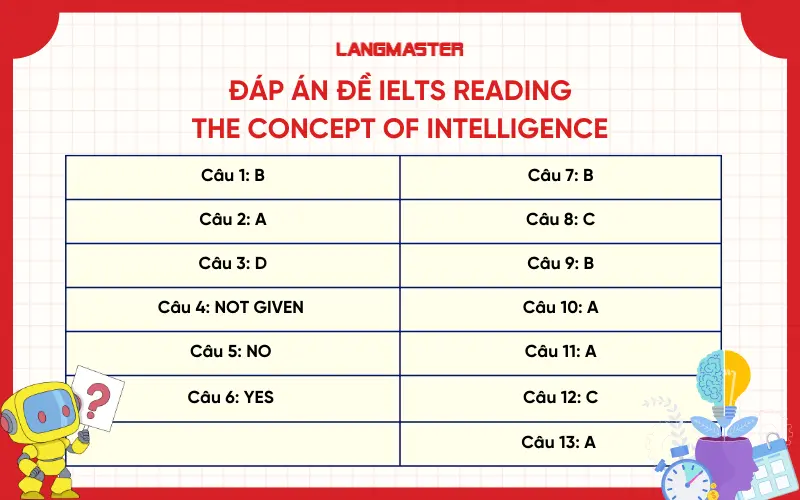
|
Câu 1: B |
Câu 7: B |
|
Câu 2: A |
Câu 8: C |
|
Câu 3: D |
Câu 9: B |
|
Câu 4: NOT GIVEN |
Câu 10: A |
|
Câu 5: NO |
Câu 11: A |
|
Câu 6: YES |
Câu 12: C |
|
Câu 13: A |
Giải thích chi tiết:
Question 1:
Information about how non-scientists’ assumptions about intelligence influence their behavior towards others
(Thông tin về cách giả định của những người không phải nhà khoa học về trí thông minh ảnh hưởng tới hành vi của họ đối với người khác.)
Đáp án: B
Thông tin trong bài: “For example, parents’ implicit theories of their children’s language development will determine at what ages they will be willing to make various corrections in their children’s speech. More generally, parents’ implicit theories of intelligence will determine at what ages they believe their children are ready to perform various cognitive tasks. Job interviewers will make hiring decisions on the basis of their implicit theories.”
(Ví dụ, lý thuyết tiềm ẩn của cha mẹ về sự phát triển ngôn ngữ của con sẽ quyết định họ sửa lỗi cho con ở độ tuổi nào. Nói chung, lý thuyết tiềm ẩn của cha mẹ về trí thông minh sẽ quyết định khi nào họ cho rằng con sẵn sàng thực hiện các nhiệm vụ nhận thức khác nhau. Nhà tuyển dụng đưa ra quyết định tuyển dụng dựa trên lý thuyết tiềm ẩn của họ.)
→ Giải thích: Đây là minh chứng rằng các quan niệm phổ biến, không khoa học của mọi người ảnh hưởng trực tiếp đến hành vi trong đời sống hàng ngày, từ cách dạy con đến quyết định tuyển dụng. Tác giả nhấn mạnh rằng trí thông minh không chỉ là khái niệm lý thuyết mà còn tác động vào các quyết định thực tế.
Question 2:
A reference to lack of clarity over the definition of intelligence
(Tham chiếu đến việc không rõ ràng về định nghĩa trí thông minh.)
Đáp án: A
Thông tin trong bài: “Looked at in one way, everyone knows what intelligence is; looked at in another way, no one does.”
(Nhìn theo một cách, ai cũng biết trí thông minh là gì; nhìn theo cách khác, không ai biết chính xác.)
→ Giải thích: Câu này nêu rõ sự mơ hồ trong định nghĩa trí thông minh. Tác giả muốn chỉ ra rằng cần xem xét cả quan niệm phổ biến và lý thuyết chính thức để hiểu đầy đủ về trí thông minh.
Question 3:
The point that a researcher’s implicit and explicit theories may be very different
(Quan điểm rằng lý thuyết tiềm ẩn và lý thuyết rõ ràng của nhà nghiên cứu có thể khác nhau đáng kể.)
Đáp án: D
Thông tin trong bài: “If an investigation of implicit theories reveals little correspondence between the extant implicit and explicit theories, the implicit theories may be wrong. But the possibility also needs to be taken into account that the explicit theories are wrong and in need of correction or supplementation.”
(Nếu nghiên cứu lý thuyết tiềm ẩn cho thấy ít sự tương đồng với lý thuyết rõ ràng hiện có, lý thuyết tiềm ẩn có thể sai. Nhưng cũng cần cân nhắc rằng lý thuyết rõ ràng có thể sai và cần được chỉnh sửa hoặc bổ sung.)
→ Giải thích: Điều này nhấn mạnh tư duy phản biện, không nên mặc định lý thuyết chính thức là đúng mà cần so sánh với quan niệm phổ biến. Sự khác biệt giữa hai loại lý thuyết có thể là cơ hội để cải tiến hiểu biết khoa học.
>> Xem thêm: Tổng hợp tài liệu luyện thi IELTS Reading miễn phí cơ bản đến nâng cao
Question 4:
Slow language development in children is likely to prove disappointing to their parents
(Sự phát triển ngôn ngữ chậm ở trẻ có khả năng khiến cha mẹ thất vọng.)
Đáp án: NOT GIVEN
Thông tin trong bài: “Parents’ implicit theories of their children’s language development will determine at what ages they will be willing to make various corrections in their children’s speech.”
(Lý thuyết tiềm ẩn của cha mẹ về sự phát triển ngôn ngữ của con sẽ quyết định họ sửa lỗi cho con ở độ tuổi nào.)
→ Giải thích: Đoạn văn chỉ nói về hành vi của cha mẹ dựa trên quan niệm của họ, không đề cập đến cảm giác thất vọng hay hài lòng. Vì vậy không thể xác định câu này đúng hay sai.
Question 5:
People’s expectations of what children should gain from education are universal
(Kỳ vọng của mọi người về những gì trẻ nên đạt được từ giáo dục là phổ quát.)
Đáp án: NO
Thông tin trong bài: “How these expectations differ is in part a function of culture. For example, expectations for children who participate in Western-style schooling are almost certain to be different from those for children who do not participate in such schooling.”
(Những kỳ vọng này một phần phụ thuộc vào văn hóa. Ví dụ, kỳ vọng đối với trẻ tham gia giáo dục kiểu phương Tây chắc chắn sẽ khác với trẻ không tham gia.)
→ Giải thích: Kỳ vọng giáo dục khác nhau theo văn hóa và môi trường, không phải giống nhau với mọi người. Tác giả muốn nhấn mạnh tính đa dạng và tương đối của quan niệm về trí thông minh và giáo dục.
Question 6:
Scholars may discuss theories without fully understanding each other
(Các học giả có thể thảo luận lý thuyết mà không hoàn toàn hiểu nhau.)
Đáp án: YES
Thông tin trong bài: “Until scholars are able to discuss their implicit theories and thus their assumptions, they are likely to miss the point of what others are saying when discussing their explicit theories and their data.”
(Cho đến khi các học giả có thể thảo luận về lý thuyết tiềm ẩn và giả định của họ, họ có khả năng bỏ lỡ ý chính của những gì người khác đang nói khi thảo luận về lý thuyết rõ ràng và dữ liệu của họ.)
→ Giải thích: Điều này nhấn mạnh rằng hiểu quan niệm tiềm ẩn của nhau là cần thiết để trao đổi khoa học hiệu quả. Nếu không, họ có thể hiểu lầm hoặc bỏ qua thông tin quan trọng, dù đang nói về cùng một lý thuyết.
>> Xem thêm: Giải đề IELTS Reading: The Impact of Invasive Species [Full answers]
Question 7:
It is desirable for the same possibilities to be open to everyone
(Mong muốn rằng mọi người đều có cơ hội như nhau)
Đáp án: B
Thông tin trong bài: “People should have equal opportunities, but they do not necessarily avail themselves equally of these opportunities and are not necessarily equally rewarded for their accomplishments.”
(Mọi người nên có cơ hội bình đẳng, nhưng họ không nhất thiết tận dụng cơ hội như nhau và không nhất thiết được thưởng như nhau cho thành tích của mình.)
→ Giải thích: Đây là Jeffersonian view, nhấn mạnh cơ hội bình đẳng cho tất cả, không phải quyền lực hay năng lực bẩm sinh. Tác giả muốn nhấn mạnh rằng công bằng trong cơ hội, nhưng kết quả phụ thuộc vào nỗ lực cá nhân.

Question 8:
No section of society should have preferential treatment at the expense of another
(Không bộ phận nào của xã hội được ưu tiên hơn bộ phận khác)
Đáp án: C
Thông tin trong bài: “In this view of democracy, people are essentially intersubstitutable except for specialized skills, all of which can be learned. We do not need or want any institutions that might lead to favoring one group over another.”
(Trong quan điểm này về dân chủ, mọi người về cơ bản có thể thay thế lẫn nhau ngoại trừ những kỹ năng chuyên môn, tất cả đều có thể học được. Chúng ta không cần hoặc không muốn bất kỳ tổ chức nào có thể dẫn đến việc ưu tiên một nhóm hơn nhóm khác.)
→ Giải thích: Đây là Jacksonian view, nhấn mạnh mọi người bình đẳng tuyệt đối, không ai được ưu tiên, tất cả kỹ năng đều có thể học được. Tác giả muốn nhấn mạnh tính dân chủ và bình đẳng tuyệt đối.
>> Xem thêm:
Question 9:
People should only gain benefits on the basis of what they actually achieve
(Mọi người chỉ nên nhận lợi ích dựa trên những gì họ thực sự đạt được)
Đáp án: B
Thông tin trong bài: “People are rewarded for what they accomplish, if given equal opportunity. Low achievers are not rewarded to the same extent as high achievers.”
(Mọi người được thưởng cho những gì họ đạt được, nếu được trao cơ hội bình đẳng. Những người đạt ít thành tích sẽ không được thưởng như những người đạt nhiều thành tích.)
--> Giải thích: Đây là Jeffersonian view, nhấn mạnh thành tích thực tế quyết định phần thưởng, không dựa trên xuất thân hay năng lực bẩm sinh.
Question 10:
Variation in intelligence begins at birth (Sự khác biệt về trí thông minh bắt đầu từ lúc sinh ra)
Đáp án: A
Thông tin trong bài: “The Hamiltonian view, which is similar to the Platonic view, is that people are born with different levels of intelligence…”
→ Giải thích: Hamiltonian view nhấn mạnh trí thông minh là bẩm sinh, mọi người sinh ra đã có năng lực khác nhau. Tác giả muốn chỉ ra rằng xã hội tự nhiên phân hóa dựa trên năng lực, từ đó lý giải vai trò của người thông minh hơn.
>> Xem thêm: Giải đề IELTS Reading Left or Right [FULL ANSWER]
Question 11:
The more intelligent people should be in positions of power (Người thông minh hơn nên nắm quyền lực)
Đáp án: A
Thông tin trong bài: “…those who are less intelligent need the good offices of the more intelligent to keep them in line, whether they are called government officials or, in Plato’s term, philosopher-kings.”
→ Giải thích: Hamiltonian view cho rằng người thông minh hơn cần nắm quyền lực để dẫn dắt xã hội và tránh hỗn loạn do những người ít thông minh gây ra.
Question 12:
Everyone can develop the same abilities (Mọi người đều có thể phát triển cùng một khả năng)
Đáp án: C
Thông tin trong bài: “In this view of democracy, people are essentially intersubstitutable except for specialized skills, all of which can be learned.”
→ Giải thích: Jacksonian view nhấn mạnh rằng mọi người có thể học và phát triển kỹ năng giống nhau, tất cả mọi người về cơ bản bình đẳng, ngoại trừ những kỹ năng chuyên môn.
Question 13:
People of low intelligence are likely to lead uncontrolled lives (Người trí tuệ thấp có khả năng dẫn tới cuộc sống hỗn loạn)
Đáp án: A
Thông tin trong bài: “…Left to themselves, the unintelligent would create, as they always have created, a kind of chaos.”
→ Giải thích: Hamiltonian view nhấn mạnh rằng người ít thông minh nếu để tự quản lý sẽ gây ra hỗn loạn, do đó cần sự dẫn dắt của người thông minh hơn để xã hội ổn định.
>> Xem thêm: Giải đề IELTS Reading: How deserts are formed [Full answers]
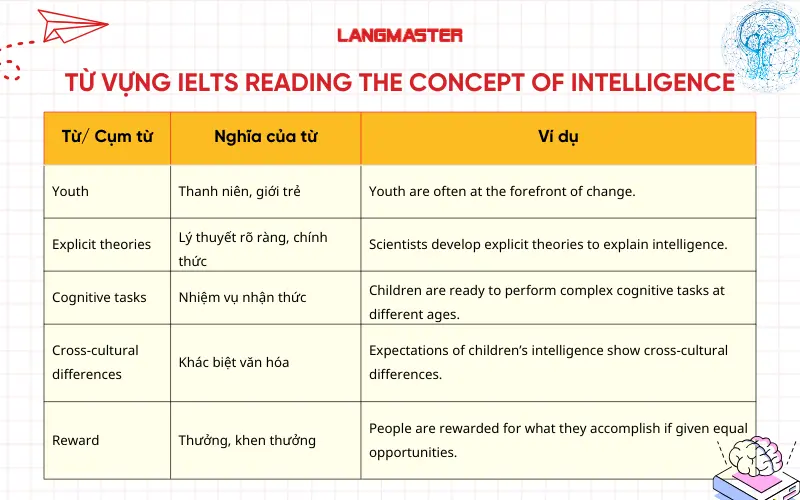
|
Từ/Cụm từ |
Nghĩa |
Ví dụ |
|
Youth |
Thanh niên, giới trẻ |
Youth are often at the forefront of change. (Giới trẻ thường đi đầu trong các thay đổi.) |
|
Implicit theories |
Lý thuyết tiềm ẩn, quan niệm không chính thức |
Parents’ implicit theories of intelligence shape how they support their children. (Quan niệm tiềm ẩn của cha mẹ về trí thông minh ảnh hưởng cách họ hỗ trợ con.) |
|
Explicit theories |
Lý thuyết rõ ràng, chính thức |
Scientists develop explicit theories to explain intelligence. (Các nhà khoa học xây dựng lý thuyết chính thức để giải thích trí thông minh.) |
|
Cognitive tasks |
Nhiệm vụ nhận thức |
Children are ready to perform complex cognitive tasks at different ages. (Trẻ em sẵn sàng thực hiện các nhiệm vụ nhận thức phức tạp ở các độ tuổi khác nhau.) |
|
Cross-cultural differences |
Khác biệt văn hóa |
Expectations of children’s intelligence show cross-cultural differences. (Kỳ vọng về trí thông minh của trẻ phản ánh khác biệt văn hóa.) |
|
Reward |
Thưởng, khen thưởng |
People are rewarded for what they accomplish if given equal opportunities. (Mọi người được thưởng cho những gì họ đạt được nếu có cơ hội bình đẳng.) |
|
Elite |
Tầng lớp ưu tú, tinh hoa |
Hamiltonian view predicts the emergence of a cognitive elite. (Quan điểm Hamilton dự đoán sự xuất hiện của một tầng lớp tinh hoa về trí tuệ.) |
|
Interchangeable |
Có thể thay thế lẫn nhau |
In the Jacksonian view, people are largely interchangeable. (Theo quan điểm Jackson, mọi người về cơ bản có thể thay thế lẫn nhau.) |
|
Competency |
Năng lực, khả năng |
People are equal in terms of competency according to Jacksonian view. (Mọi người bình đẳng về năng lực theo quan điểm Jackson.) |
|
Developmental differences |
Khác biệt phát triển |
Understanding implicit theories can help explain developmental differences. (Hiểu lý thuyết tiềm ẩn giúp giải thích sự khác biệt trong phát triển.) |
>> Xem thêm: Thời gian làm Reading IELTS: Chiến lược phân bổ và mẹo làm bài hiệu quả
Để đạt được band điểm IELTS cao và cải thiện kỹ năng Reading, người học cần một lộ trình luyện thi rõ ràng, môi trường giao tiếp thực tế và sự hướng dẫn từ giảng viên có chuyên môn cao. Trong số nhiều lựa chọn hiện nay, Langmaster được đánh giá là trung tâm luyện thi IELTS online uy tín tốt nhất dành cho người mất gốc cũng như người mới bắt đầu.
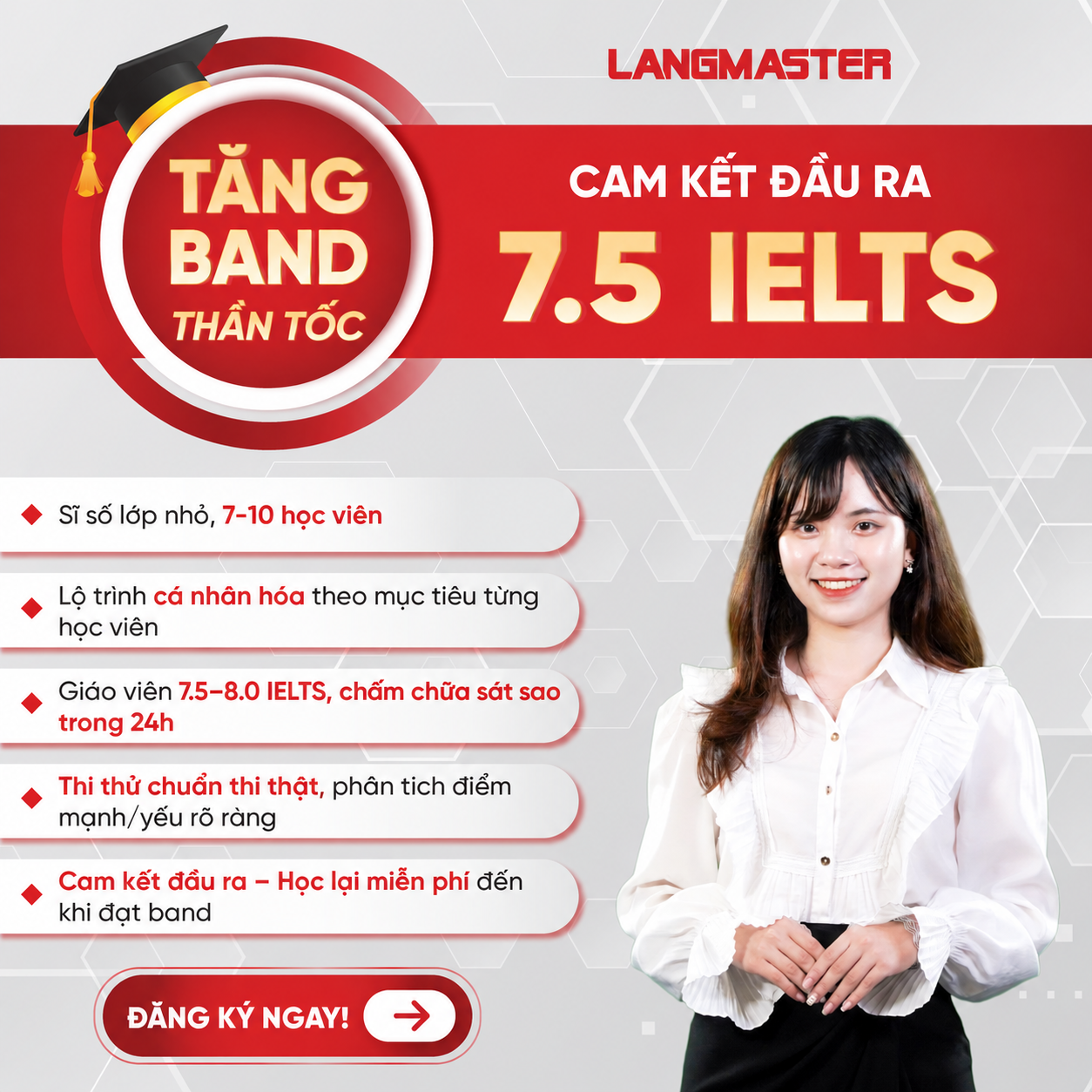
Khóa học IELTS Online tại Langmaster được thiết kế dựa trên giáo trình chuẩn đề thi thật, kết hợp học cá nhân hóa và phản hồi 1-1 từ giảng viên 7.5+ IELTS, giúp học viên phát triển toàn diện cả 4 kỹ năng: Listening, Speaking, Reading, và Writing.
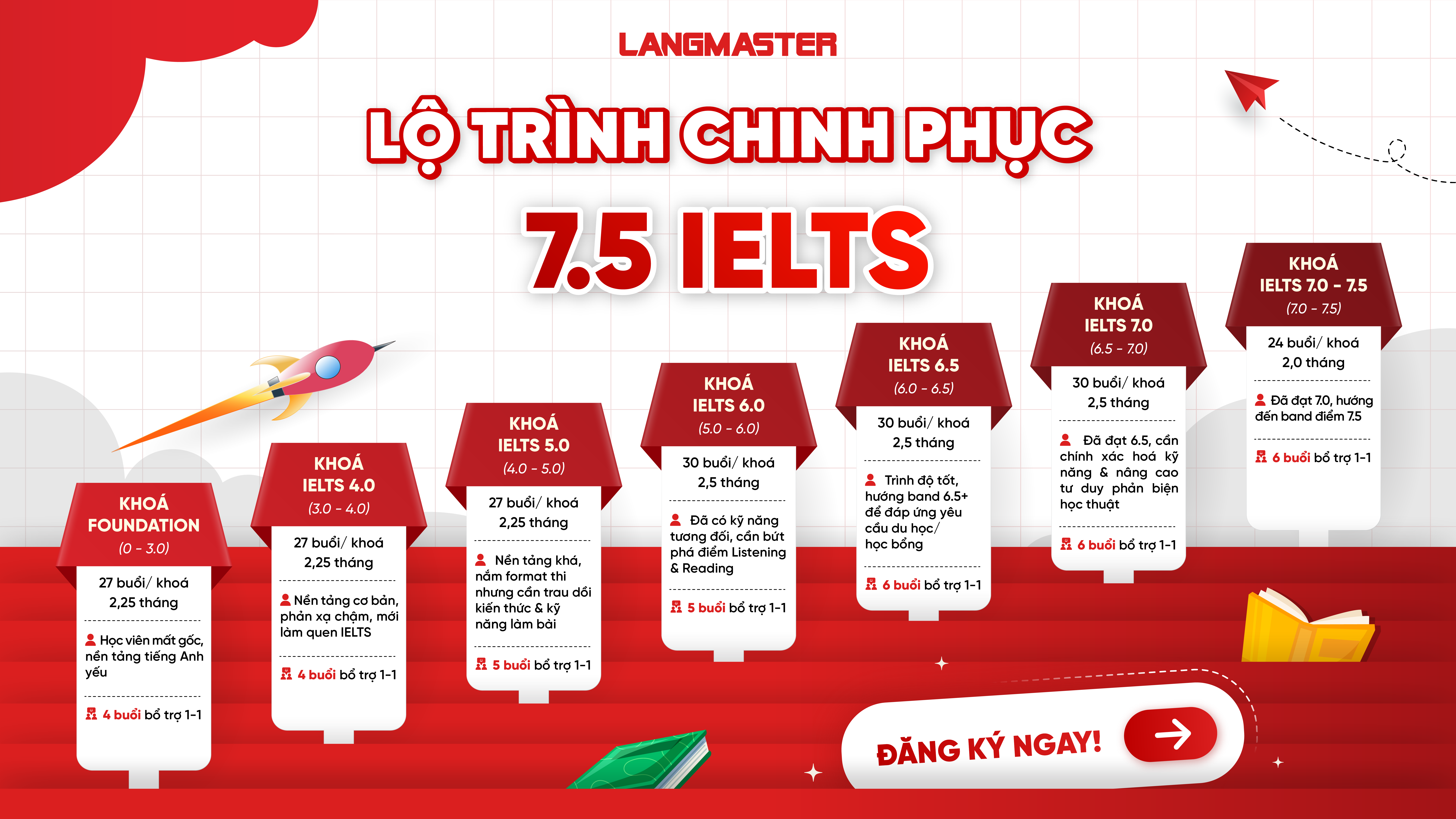
Ưu điểm nổi bật của khóa học IELTS Online Langmaster:
Hãy đăng ký khóa IELTS online tại Langmaster ngay hôm nay để nhận được buổi HỌC THỬ MIỄN PHÍ trước khi đăng ký.
Kết luận: Như vậy, chúng ta đã vừa cùng nhau phân tích và giải chi tiết đề IELTS Reading The concept of intelligence. Bài viết đã làm rõ các kỹ năng cần thiết để tìm thông tin, nhận biết từ khóa và áp dụng chiến lược đọc hiểu hiệu quả. Hy vọng hướng dẫn này sẽ giúp bạn tự tin hơn khi làm bài và cải thiện điểm số Reading IELTS.
Nếu bạn đang tìm kiếm khóa học IELTS online tốt nhất, phù hợp cho cả người mới bắt đầu lẫn người mất gốc, Langmaster chính là lựa chọn đáng tin cậy để bứt phá band điểm IELTS mơ ước.
Chúc bạn học tập hiệu quả và đạt kết quả cao trong kỳ thi IELTS sắp tới!

![Giải đề thi European Heat Wave IELTS Reading [FULL ANSWER]](https://langmaster.edu.vn/storage/uploads/original/2025/11/20/european-heat-wave-ielts-reading-answers.png)
Tổng hợp đề thi European Heat Wave IELTS Reading Answers kèm phân tích chi tiết, từ vựng và đáp án giúp bạn tối ưu điểm Reading nhanh chóng.
![Đề thi IELTS Reading có đáp án mới nhất 2025-2026 [Cập nhật liên tục]](https://langmaster.edu.vn/storage/uploads/original/2025/12/25/de-thi-ielts-reading.png)
Đề thi IELTS Reading có đáp án mới nhất 2025/2026, cập nhật liên tục đề thi thật và Cambridge, kèm lời giải chi tiết giúp nâng band hiệu quả.
Bài viết tổng hợp chi tiết đề thi IELTS Reading Holidays with a difference, đáp án kèm giải thích chi tiết, từ vựng cần lưu ý khi làm bài giúp bạn luyện thi hiệu quả và nâng cao band điểm.

Bài viết tổng hợp chi tiết đề thi IELTS Reading on the trail of the honey badger, đáp án kèm giải thích chi tiết, từ vựng cần lưu ý khi làm bài giúp bạn luyện thi hiệu quả và nâng cao band điểm.
![Giải đề IELTS Reading Growing more for less [FULL ANSWER]](https://langmaster.edu.vn/storage/uploads/original/2025/10/22/growing-more-for-less-ielts-reading-answers.png)
Khám phá bài đọc Growing more for less IELTS Reading: Tổng hợp đáp án, từ vựng quan trọng và phân tích chi tiết giúp bạn hiểu cách công nghệ vệ tinh hỗ trợ nông nghiệp hiện đại


Hơn 16 năm kinh nghiệm, đào tạo thành công hàng trăm nghìn học viên
Phương pháp giảng dạy hiện đại, học viên tiến bộ rõ rệt
Lộ trình học chuẩn quốc tế, phù hợp với nhu cầu thực tiễn
Giáo viên đạt chuẩn Quốc tế với chất lượng top đầu thị trường, giàu kinh nghiệm
Học online linh hoạt, cam kết đầu ra bằng văn bản

![Giải đề IELTS Reading Robots [FULL ANSWERS]](https://langmaster.edu.vn/storage/uploads/original/2025/11/08/ielts-reading-giai-de-robots.png)
![Giải đề thi View of intelligence across cultures IELTS Reading [FULL ANSWER]](https://langmaster.edu.vn/storage/uploads/original/2025/11/25/views-of-intelligence-across-cultures-ielts-reading.png)
.png)
![Giải đề IELTS Reading: Young the future of travel [FULL ANSWERS]](https://langmaster.edu.vn/storage/uploads/original/2025/11/21/youth-the-future-of-travel-ielts-reading-answers.png)
![Giải đề thi Endless Harvest IELTS Reading [FULL ANSWER]](https://langmaster.edu.vn/storage/uploads/original/2025/11/12/endless-harvest-ielts-reading-answers.png)