Khóa học
IELTS Online
IELTS Online
Giảm đến 18%
Đăng ký ngay
Mục lục [Ẩn]
Trong bài viết này, Langmaster sẽ giúp bạn chinh phục chủ đề “Establishing Your Birthrights – IELTS Reading” với bản giải chi tiết, từ vựng quan trọng và hướng dẫn cách làm từng dạng câu hỏi. Đây là một trong những bài đọc học thuật phổ biến, giúp bạn rèn kỹ năng phân tích, tìm ý chính và nhận diện thông tin nhanh chóng. Cùng Langmaster khám phá cách xử lý trọn vẹn bài Establishing Your Birthrights IELTS Reading Answers để nâng cao kỹ năng Reading và sẵn sàng chạm tới band điểm mơ ước nhé!
| Bạn đang ở band IELTS bao nhiêu? Làm bài test miễn phí và nhận ngay lộ trình học cá nhân hóa. 👉 Đăng ký test IELTS miễn phí ngay |
ESTABLISHING YOUR BIRTHRIGHTS
Position in the family can play a huge role in shaping character, finds Clover Stroud.
A. Last week I was given a potent reminder of how powerful birth order might be in determining a child's character. My son, Jimmy Joe, nine, and my daughter, Dolly, six, were re-enacting a TV talent show. Jimmy Joe elected himself judge and Dolly was a contestant. Authoritative and unyielding, he wielded a clipboard, delivering harsh criticisms that would make a real talent show judge flinch. Initially Dolly loved the attention, but she soon grew tired of his dominance, instigating a pillow fight, then a fist fight. It ended, inevitably, in tears. A visiting friend, with an Older, more successful sister, declared it ‘classic first child behaviour of dominance and
supposed authority'. Dolly's objection to her brother's self-appointed role as leader was justified, he announced, while Jimmy Joe's superiority was characteristic of the forceful personality of firstborns. Birth order, he said, wasn't something they could just shrug off.
B. Debate about the significance of birth order goes right to the heart of the nature versus nurture argument and is, consequently, surrounded by huge controversy. This controversy has raged since the 19th century, when Austrian psychiatrist Alfred Adler argued that birth order can define the way someone deals with life. He identified firstborns as driven and often suffering from a sense of having been 'dethroned' by a second child. Younger children, he stated, were hampered by having been more pampered than older siblings. It's a view reiterated by Professor Frank Sulloway's influential work, Born to Rebel. Sulloway, a leading proponent of the birth order idea, argued it has a definitive effect on the 'Big Five' personality traits of openness, conscientiousness, extroversion, agreeableness and neuroticism.
C. According to the birth-order theory, first children are usually well-organised high achievers. However, they can have an overdeveloped sense of entitlement and be unyielding. Second children are sometimes very competitive through rivalry with the older sibling. They're also good mediators and negotiators. keen to keep everyone happy. Middle children, tagged the ‘easy' ones, have good diplomacy skills. They suffer from a tendency to feel insignificant beside other siblings and often complain of feeling invisible to their parents. Youngest children are often the most likely to rebel, feeling the need to 'prove' themselves. They're often extroverts and are sometimes accused of being selfish. Twins inevitably find it harder to see themselves as individuals, unless their parents have worked hard to identify them as such. It's not unusual for one twin to have a slightly dominant role over the other and take the lead role.
D. But slapping generalised labels on a child is dangerous; they change all the time, often taking turns at being the ‘naughty one' or the 'diligent one'. However, as one of five children, I know how hard it is to transcend the tags you earn according to when you were born. It is unsurprising then that my eldest sister is the successful entrepreneur, and that, despite covering all the big bases of adult life like marriage. kids and property, my siblings will probably always regard me as their spoilt younger sister.
E. 'As the Oldest of three, I've found it hard not to think of my own three children as having the same personality types that the three of us had when I was growing up,' says Lisa Cannan, a teacher. 'I identify with my eldest son, who constantly takes the lead in terms of organisation and responsibility. My daughter, the middle child, is more cerebral than her brothers. She's been easier than them. She avoids confrontation, so has an easy relationship with both boys. My youngest is gorgeous but naughty. I know I'm partly to blame for this, as I forgive him things the elder two wouldn't get away with.'
F. As a parent. It's easy to feel guilty about saddling a child with labels according to birth order. but as child psychologist Stephen Bayliss points out, these characteristics might be better attributed to parenting styles, rather than a child's character. He says that if a parent is worried about having encouraged, for example, an overdeveloped sense of dominance in an older sibling or spoiled a younger child, then it's more useful to look at ways this can be addressed than over-analysing why it happened. Bayliss is optimistic that as adults we can overcome any negative connotations around birth order. 'Look at the way you react to certain situations with your siblings. If you're unhappy about being treated as a certain type of personality, try to work out if it's a role that you've willingly accepted. If you're unhappy with the role, being dynamic about focusing on your own reactions, rather than blaming theirs, will help you overcome it.
Change isn't easy but nobody need be the victim of their biography.'
Questions 14-19
Choose the correct heading for each paragraph
from the list of headings below.
Write the correct number, i—ix.
Questions 20-23
Look at the following statements and the list of
people below. Match each statement with the
correct person, A—D. Write the correct letter, A—D.
NB You may use any letter more than once.
Questions 24-25
Choose ONE WORD ONLY for each answer.
24. First-born children have expectations that are too high with regard to…………..
25. Middle children are often considered………… by their parents.
>> Xem thêm: Giải đề New perspectives on food production IELTS Reading
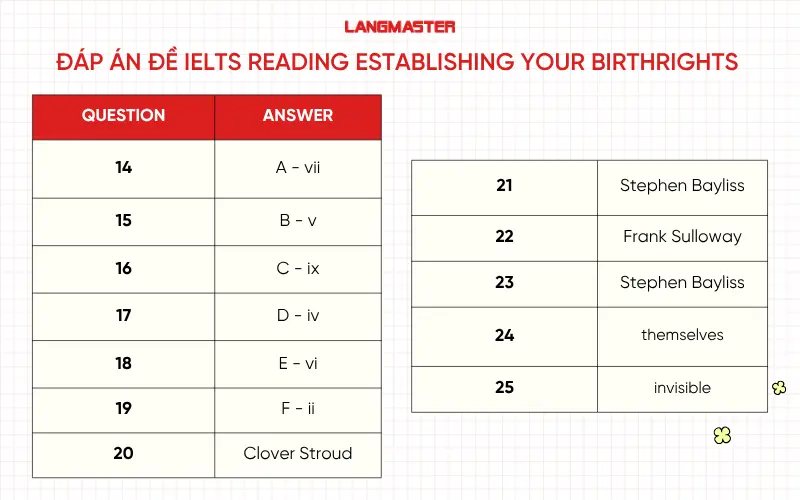
14. Đáp án: Đoạn A → vii
Giải thích: Đoạn A mở đầu bằng một tình huống thực tế giữa hai anh em, trong đó người anh thể hiện tính cách thống trị – đặc trưng của con cả. Đây chính là “một ví dụ điển hình về hành vi liên quan đến thứ tự sinh” → phù hợp với heading vii.
15. Đáp án: Đoạn B → v
Giải thích: Đoạn này nói về lịch sử và sự tiếp tục ủng hộ của lý thuyết “birth order” từ Adler cho đến Sulloway, cho thấy lý thuyết này vẫn còn được ủng hộ trong hiện tại → đúng với heading v.
16. Đoạn C → ix
Giải thích: Đoạn C liệt kê chi tiết đặc điểm của từng vị trí trong gia đình: con cả, con giữa, con út, sinh đôi — rõ ràng là một mô tả chi tiết về từng loại con trong gia đình nói chung → heading ix.
17. Đoạn D → iv
Giải thích: Tác giả nghi ngờ việc gán nhãn con cái theo thứ tự sinh, nhưng vẫn thừa nhận điều đó đúng trong trường hợp của gia đình mình. Đây chính là nghi ngờ lý thuyết nhưng vẫn thấy nó đúng qua trải nghiệm cá nhân → heading iv.
18. Đoạn E → vi
Giải thích: Người mẹ mô tả việc tính cách theo thứ tự sinh của mình lặp lại ở chính con cái mình, chứng tỏ đặc điểm theo thứ tự sinh vẫn tiếp diễn qua thế hệ → heading vi.
19. Đoạn F → ii
Giải thích: Nhà tâm lý học Stephen Bayliss nhấn mạnh rằng quan trọng là tìm cách khắc phục, không phải chỉ phân tích nguyên nhân — tức là giải pháp quan trọng hơn nguyên nhân → heading ii.
20. Đáp án: Clover Stroud
Giải thích: Trong đoạn E, Lisa Cannan (một bà mẹ) — được tác giả Clover Stroud trích dẫn — nói rằng cô thấy những đặc điểm mà chính cô và anh chị em mình có hồi nhỏ tái hiện ở con cái mình.
“I've found it hard not to think of my own three children as having the same personality types that the three of us had when I was growing up.” → Kinh nghiệm thời thơ ấu ảnh hưởng đến hành vi làm cha mẹ.
21. Đáp án: Stephen Bayliss
Trong đoạn F, Bayliss nói rằng những đặc điểm có thể đến từ phong cách nuôi dạy (parenting styles) chứ không hẳn do thứ tự sinh. → “These characteristics might be better attributed to parenting styles, rather than a child's character
22. Đáp án: Frank Sulloway
Trong đoạn B, Sulloway được nhắc đến là người “argued it has a definitive effect on the Big Five personality traits” → Tức là có mối liên hệ giữa thứ tự sinh và nhóm 5 đặc điểm tính cách quan trọng.
23. Đáp án: Stephen Bayliss
Cũng trong đoạn F, Bayliss nói rằng người lớn có thể vượt qua cảm giác tiêu cực về vai trò trong gia đình → “If you're unhappy... being dynamic about focusing on your own reactions... will help you overcome it.” → Khẳng định con người có thể thay đổi cảm xúc tiêu cực về cách người thân đối xử với mình
24. Đáp án: themselves
Thông tin đoạn C: “According to the birth-order theory, first children are usually well-organised high achievers. However, they can have an overdeveloped sense of entitlement and be unyielding.”
Giải thích: “Overdeveloped sense of entitlement” nghĩa là cảm giác quyền được hưởng vượt quá mức, hay nói cách khác, mong đợi/quá kỳ vọng vào quyền lợi hoặc bản thân. Cụm “with regard to...” → phù hợp nhất với danh từ themselves, vì họ kỳ vọng quá cao về bản thân mình.
25. Đáp án: invisible
Thông tin đoạn C: “Middle children, tagged the ‘easy' ones, have good diplomacy skills. They suffer from a tendency to feel insignificant beside other siblings and often complain of feeling invisible to their parents.”
Giải thích: Cụm “feel invisible to their parents” = “bị bố mẹ xem như vô hình” → tức không được chú ý hoặc bị lãng quên. Câu hỏi yêu cầu “ONE WORD ONLY” → từ phù hợp nhất là invisible (chính trong đoạn văn).
| Học mãi mà IELTS không lên band? Học thử IELTS miễn phí cùng giáo viên 7.5+, chấm chữa lỗi sai ngay lập tức. 👉 Đăng ký học thử miễn phí ngay |
>>> Xem thêm:
Qua bài viết này, bạn đã được tìm hiểu toàn diện về nội dung, ý chính, từ vựng quan trọng và cách giải từng dạng câu hỏi trong chủ đề “Establishing Your Birthrights – IELTS Reading Answers.” Từ việc phân tích cấu trúc bài đọc, nhận diện manh mối trong câu hỏi đến cách suy luận logic, Langmaster mong rằng bạn đã trang bị thêm nhiều kỹ năng làm bài Reading hiệu quả hơn.
Tuy nhiên, để đạt band điểm cao và phát triển đồng đều cả 4 kỹ năng, việc tự học vẫn chưa đủ. Bạn cần có lộ trình học rõ ràng, sự hướng dẫn từ chuyên gia, và môi trường luyện thi chuyên nghiệp – đó chính là những gì Langmaster mang đến cho bạn.
Langmaster – trung tâm luyện thi IELTS online uy tín hàng đầu tại Việt Nam – là lựa chọn tốt nhất dành cho bạn. Với hơn 16 năm kinh nghiệm đào tạo, Langmaster cam kết mang đến trải nghiệm học tập hiệu quả, giúp bạn đạt được mục tiêu điểm số IELTS thực tế.
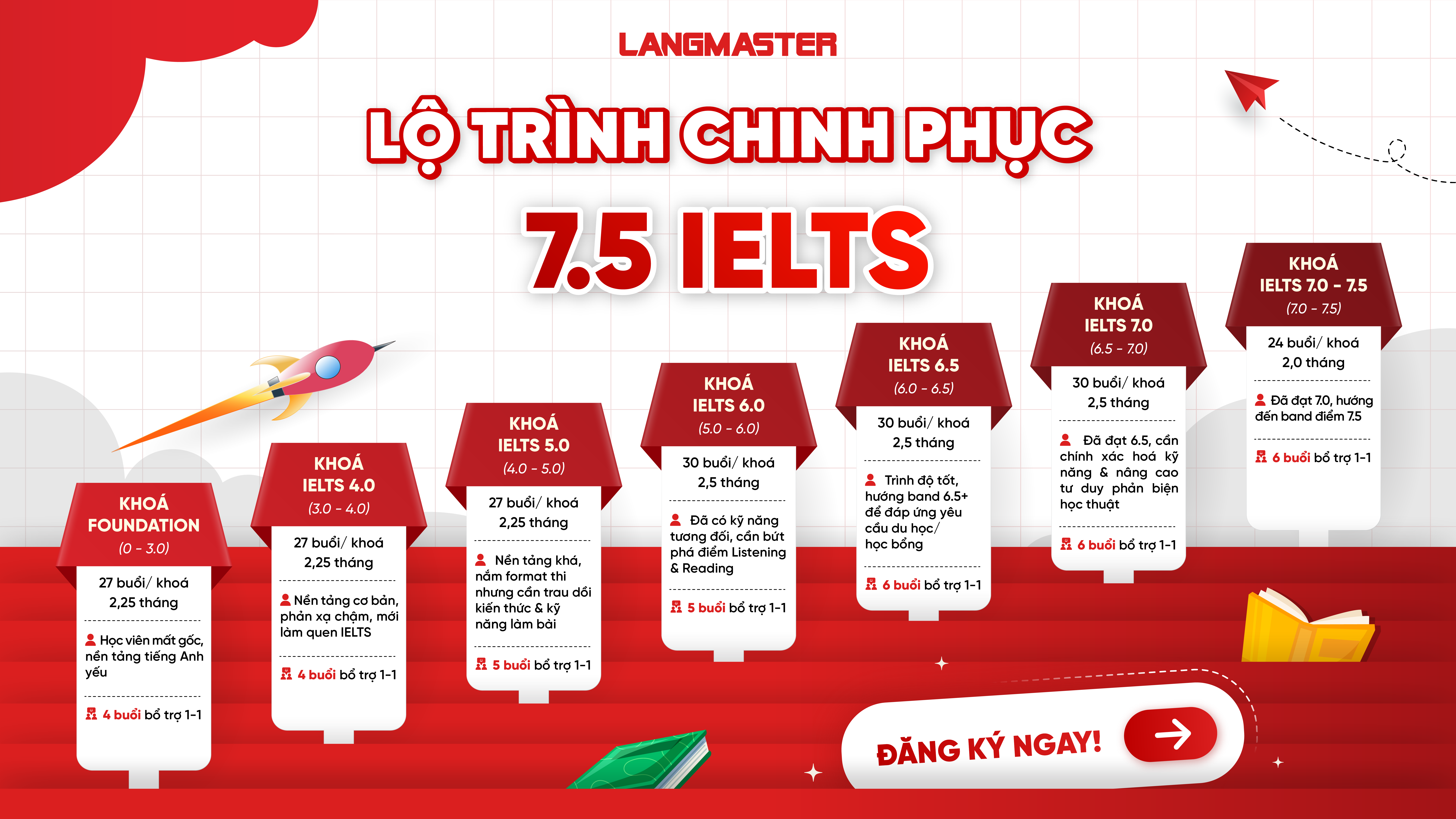
Trước khi bắt đầu, bạn có thể tham gia buổi học thử IELTS online miễn phí tại Langmaster để được kiểm tra trình độ, nhận tư vấn lộ trình cá nhân hóa và trải nghiệm phương pháp giảng dạy hiện đại. Đây là cơ hội tuyệt vời để bạn cảm nhận vì sao Langmaster được đánh giá là trung tâm luyện thi IELTS online uy tín và tốt nhất tại Việt Nam.
![Giải đề thi European Heat Wave IELTS Reading [FULL ANSWER]](https://langmaster.edu.vn/storage/uploads/original/2025/11/20/european-heat-wave-ielts-reading-answers.png)
Tổng hợp đề thi European Heat Wave IELTS Reading Answers kèm phân tích chi tiết, từ vựng và đáp án giúp bạn tối ưu điểm Reading nhanh chóng.
![Đề thi IELTS Reading có đáp án mới nhất 2025-2026 [Cập nhật liên tục]](https://langmaster.edu.vn/storage/uploads/original/2025/12/25/de-thi-ielts-reading.png)
Đề thi IELTS Reading có đáp án mới nhất 2025/2026, cập nhật liên tục đề thi thật và Cambridge, kèm lời giải chi tiết giúp nâng band hiệu quả.
Bài viết tổng hợp chi tiết đề thi IELTS Reading Holidays with a difference, đáp án kèm giải thích chi tiết, từ vựng cần lưu ý khi làm bài giúp bạn luyện thi hiệu quả và nâng cao band điểm.
Bài viết tổng hợp chi tiết đề thi IELTS Reading on the trail of the honey badger, đáp án kèm giải thích chi tiết, từ vựng cần lưu ý khi làm bài giúp bạn luyện thi hiệu quả và nâng cao band điểm.
![Giải đề IELTS Reading Growing more for less [FULL ANSWER]](https://langmaster.edu.vn/storage/uploads/original/2025/10/22/growing-more-for-less-ielts-reading-answers.png)
Khám phá bài đọc Growing more for less IELTS Reading: Tổng hợp đáp án, từ vựng quan trọng và phân tích chi tiết giúp bạn hiểu cách công nghệ vệ tinh hỗ trợ nông nghiệp hiện đại


Hơn 16 năm kinh nghiệm, đào tạo thành công hàng trăm nghìn học viên
Phương pháp giảng dạy hiện đại, học viên tiến bộ rõ rệt
Lộ trình học chuẩn quốc tế, phù hợp với nhu cầu thực tiễn
Giáo viên đạt chuẩn Quốc tế với chất lượng top đầu thị trường, giàu kinh nghiệm
Học online linh hoạt, cam kết đầu ra bằng văn bản

![Giải đề IELTS Reading Left or Right [FULL ANSWER]](https://langmaster.edu.vn/storage/uploads/original/2025/10/18/left-or-right-ielts-reading-answers.png)
![Giải đề Learning to Work IELTS Reading with Location [FULL ANSWER]](https://langmaster.edu.vn/storage/uploads/original/2025/10/28/learning-to-walk-ielts-reading.png)