Khóa học
IELTS Online
IELTS Online
Giảm đến 18%
Đăng ký ngay
Mục lục [Ẩn]
Ngữ pháp là nền tảng quan trọng để đạt điểm cao trong kỳ thi IELTS. Bài viết này tổng hợp các dạng bài tập ngữ pháp IELTS đa dạng từ cơ bản đến nâng cao, kèm đáp án chi tiết và giải thích rõ ràng. Nhờ đó, bạn có thể luyện tập một cách hệ thống, khắc phục điểm yếu và nâng cao khả năng diễn đạt trong Writing và Speaking.
| Bạn đang ở band IELTS bao nhiêu? Làm bài test miễn phí và nhận ngay lộ trình học cá nhân hóa. 👉 Đăng ký test IELTS miễn phí ngay |
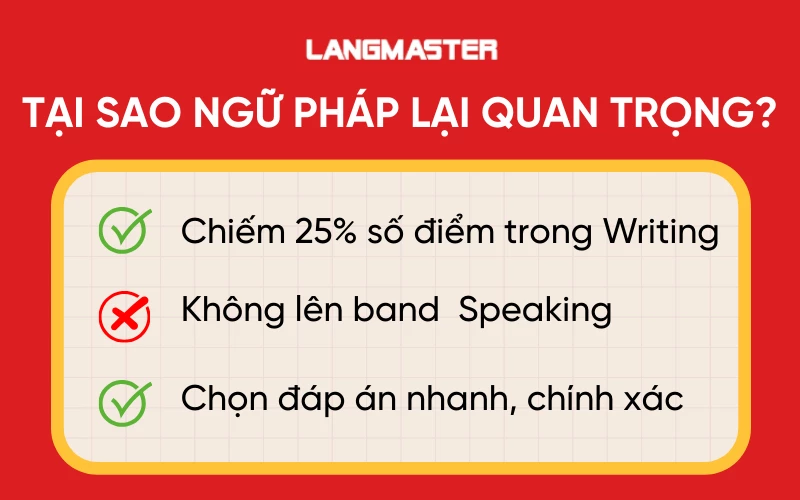
Ngữ pháp xuất hiện ở cả bốn kỹ năng IELTS và ảnh hưởng trực tiếp đến kết quả của bạn. Trong Writing, cấu trúc câu chiếm 25% số điểm, yêu cầu thí sinh phải sử dụng linh hoạt câu đơn, câu ghép, câu phức cùng thì và dạng từ chính xác.
Ở Speaking, lỗi ngữ pháp thường là nguyên nhân khiến bạn dừng lại ở band 5.0 – 6.0, vì vậy việc vận dụng đúng thì, câu điều kiện hay mệnh đề quan hệ sẽ giúp lời nói tự nhiên và logic hơn.
Đối với Reading và Listening, khả năng nắm vững ngữ pháp giúp bạn xác định từ loại, phân tích ý nghĩa câu và chọn đáp án nhanh, chính xác hơn – đặc biệt trong những câu hỏi phức tạp.
Exercise 1: Chọn đáp án đúng nhất để điền vào chỗ trống trong mỗi câu sau.
1. She speaks English very .........., so everyone understands her easily.
A. clear
B. clearly
C. clarity
D. clearing
2. You should avoid ............ too much fast food if you want to stay healthy.
A. eat
B. eating
C. to eat
D. ate
3. The students are excited ............ their upcoming study tour to Singapore.
A. about
B. on
C. with
D. for
4. He didn’t go to school yesterday ............ he was ill.
A. because
B. although
C. so
D. but
5. If I ............ harder, I would have passed the exam.
A. study
B. studied
C. had studied
D. studying
6. My father suggests that we ............ dinner out tonight.
A. have
B. had
C. having
D. to have
7. He is one of the most talented ............ in the company.
A. engineer
B. engineering
C. engineered
D. engineers
8. By the time she arrived, the film ............ already.
A. has started
B. started
C. had started
D. was starting
9. The man ............ is standing over there is my teacher.
A. which
B. who
C. whose
D. whom
10. She prefers reading books ............ watching TV.
A. than
B. instead
C. rather
D. to
Exercise 2: Cho dạng đúng của các từ trong ngoặc để tạo thành một bài IELTS Writing Task 2 hoàn chỉnh
Some people think that professional athletes make good role models for young people, while others believe they don’t.
Discuss both these points of views and give your own opinion.
People everywhere like watching sports. Many top (1-athletics) __________ are admired throughout their countries, and some even have fans all around the world. Young people especially, view many athletes as role models and want to emulate the way these stars dress, act and live their lives. While some athletes aren't deserving of their "role model" status, others act like role models and (2-responsibility) __________ community (3-citizenship) __________.
Top athletes get the attention of (4-youth) __________ people. Most children and teenagers like to follow professional sports. For many of them, star athletes represent heroes, and children want to be like their heroes. This means they will want to play sports, which is good for their (5-healthy) __________. Playing sports also teaches (6-value) __________ life lessons such as teamwork, discipline, goal setting, and the realities of dealing with success and failure. Professional athletes demonstrate the importance of working hard to achieve a goal, or practicing (7-regular) __________ to become good at something. This is a good example for children to follow.
However, professional athletes are not always good role models. For one thing, when young athletes reach a level of fame, it comes with media attention, large (8-finance) __________ benefits and social attention. This can lead children to believe that money and fame are an important part of sports. Children might focus more on these aspects than on the fun of the game or on the challenge of learning how to play (9-good) __________. Then there are those athletes who behave badly. For example, some cheat to win their games or take drugs to improve their performance. This kind of behavior sends the wrong message to children.
Athletes are people who are held at a lofty place in the society owing to their popularity and wealth. These attributes are what makes people want to look up to them and model various facets of their lives along those of the athletes. We can thus be led to conclude that (10-profession) __________ athletes can be very good role models for children, as long as they focus on the positive aspects of playing sports.
>> Xem thêm: Lộ trình học IELTS cho người mới bắt đầu từ 0 lên 7.0 hiệu quả
Exercise 3: Có 3 lỗi sai trong đoạn văn sau. Tìm và sửa chúng để tạo thành một bài IELTS Speaking Part 3 hoàn chỉnh.
I think managers need to train their employees to deliver greatly customer service. There are lots of things that staff members can do, such as ensuring that customers are greeted in the right way, their problems are handled quick, and they are asked for feedback. For example, the staff in my favorite cafe greet customers as soon as they come through the door, and they always check that we are happier before we leave.
Exercise 4: Chọn đáp án đúng nhất điền vào mỗi chỗ trống dưới đây.
Music is an important part of our daily lives. It can make us feel happy, sad, or excited. Some people even say that music can help them (1) _____ stress after a long day at work. Scientists have shown that listening to music can improve our memory and even help us study better. For this reason, many students like to play music while they do their homework.
Another interesting fact is that the type of music we enjoy often (2) _____ on our culture and personal experiences. For example, people who grow up in Asia may prefer traditional instruments, while those in the West may like rock or pop. But no matter where you are from, music is something that can (3) _____ people together. It is often used at celebrations such as weddings and birthdays, because it creates a sense of joy and unity.
Today, music is easier to enjoy than ever before. With the (4) _____ of the Internet, people can listen to songs from all over the world just by using their phones. This shows that music is not only a form of entertainment but also a (5) _____ that connects cultures globally.
|
Câu 1: |
A. reduce |
B. prevent |
C. avoid |
D. decrease |
|
Câu 2: |
A. depends |
B. relies |
C. bases |
D. results |
|
Câu 3: |
A. divide |
B. bring |
C. separate |
D. push |
|
Câu 4: |
A. growth |
B. arrival |
C. invention |
D. development |
|
Câu 5: |
A. bridge |
B. block |
C. limit |
D. wall |
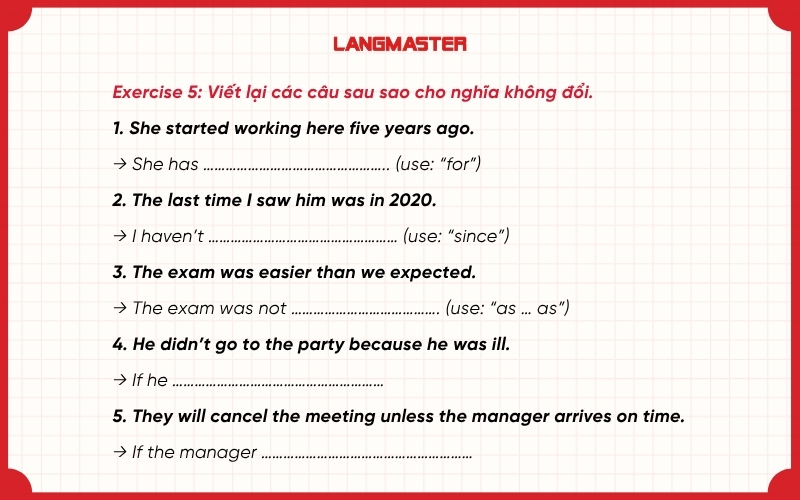
Exercise 5: Viết lại các câu sau sao cho nghĩa không đổi.
1. She started working here five years ago.
→ She has …………………………………………..
2. The last time I saw him was in 2020.
→ I haven’t ……………………………………………
3. The exam was easier than we expected.
→ The exam was not ………………………………….
4. He didn’t go to the party because he was ill.
→ If he …………………………………………………
5. They will cancel the meeting unless the manager arrives on time.
→ If the manager …………………………………………………
6 The furniture was so expensive that I didn’t buy it.
→ The furniture was too …………………………………………..
7. Tom learned to drive when he was nineteen.
→ Tom has ………………………………………………………….
8. We couldn’t drive because of the fog.
→ The fog prevented ………………………………………………
9. The cake was so hard so I couldn’t cut it.
→ It was …………………………………………………………….
10. I can’t cook as well as my mother does.
→ My mother ………………………………………………………
Exercise 6: Bài tập về các thì trong tiếng Anh
1. The number of students studying abroad ______ significantly over the past decade.
A. increased
B. has increased
C. increases
D. had increase
2. When I arrived at the station, the train ______.
A. already left
B. has already left
C. had already left
D. leaves
3. Many employees ______ from home since digital technology became more widely available.
A. work
B. worked
C. have worked
D. had worked
4. Last year, the government ______ a new policy to reduce plastic waste.
A. introduces
B. introduced
C. has introduced
D. introducing
5. By 2030, many cities ______ more electric buses into their public transport systems.
A. introduce
B. introduced
C. will have introduced
D. have introduce
6. While the researchers ______ the data, they discovered an unexpected trend.
A. analyse
B. were analysing
C. have analysed
D. had analyse
7. She ______ English for three years before she took her first IELTS test.
A. studies
B. has studied
C. had studied
D. is studying
8. The percentage of people using public transport ______ gradually at the moment.
A. rises
B. rose
C. is rising
D. has rose
9. Scientists ______ several possible solutions to this problem in recent years.
A. proposed
B. have proposed
C. propose yesterday
D. had proposing
10. This time next year, I ______ at university.
A. study
B. studied
C. will be studying
D. have studied
>> Xem thêm: Trọn bộ bài tập thì Hiện tại hoàn thành hay nhất có đáp án
Exercise 7. Bài tập Subject–Verb Agreement
1. The increasing cost of housing ______ a serious problem for young people.
A. are
B. have
C. is
D. were
2. A large number of university students ______ part-time jobs.
A. has
B. have
C. is
D. was
3. The number of private vehicles ______ rapidly in recent years.
A. increase
B. have increased
C. has increased
D. are increasing
4. Neither the teachers nor the principal ______ satisfied with the new timetable.
A. are
B. were
C. is
D. have
5. Each of the participants ______ required to complete the questionnaire.
A. are
B. is
C. have
D. were
6. Social media platforms ______ the way people communicate.
A. has changed
B. have changed
C. changes
D. is changed
7. One of the main causes of air pollution ______ excessive traffic.
A. are
B. have been
C. is
D. were
8. The quality of public services ______ an important factor when people choose where to live.
A. are
B. is
C. have
D. were
9. Both education and healthcare ______ significant government investment.
A. requires
B. require
C. is requiring
D. has required
10. Every student and teacher ______ access to the online learning platform.
A. have
B. are having
C. has
D. were
Exercise 8. Bài tập mạo từ A, An, The và Zero Article
1. Education plays ______ important role in economic development.
A. a
B. an
C. the
D. không dùng mạo từ
2. ______ Internet has transformed the way people access information.
A. A
B. An
C. The
D. Không dùng mạo từ
3. Many students hope to attend ______ university after finishing high school.
A. a
B. an
C. the
D. không dùng mạo từ
4. Governments should provide greater support for ______ elderly.
A. a
B. an
C. the
D. không dùng mạo từ
5. Air pollution is becoming ______ increasingly serious problem in large cities.
A. a
B. an
C. the
D. không dùng mạo từ
6. Some people believe that ______ technology can improve the quality of education.
A. a
B. an
C. the
D. không dùng mạo từ
7. He hopes to become ______ engineer after graduation.
A. a
B. an
C. the
D. không dùng mạo từ
8. ______ environment should be protected for future generations.
A. A
B. An
C. The
D. Không dùng mạo từ
9. Governments need to find ______ effective solution to traffic congestion.
A. a
B. an
C. the
D. không dùng mạo từ
10. ______ young people are generally more familiar with digital technology.
A. A
B. An
C. The
D. Không dùng mạo từ
Exercise 9. Bài tập giới từ tiếng Anh
1. Many young people are concerned ______ the rising cost of living.
A. for
B. about
C. at
D. from
2. Governments should invest more money ______ public transportation.
A. on
B. at
C. in
D. for
3. There has been a significant increase ______ the number of people working remotely.
A. in
B. on
C. at
D. for
4. Air pollution can have a negative impact ______ children's health.
A. at
B. for
C. on
D. from
5. Many employees struggle to cope ______ work-related stress.
A. to
B. with
C. of
D. for
6. The percentage of commuters travelling by car fell ______ 60% to 45%.
A. from
B. at
C. by
D. of
7. There is growing demand ______ affordable housing in major cities.
A. at
B. for
C. in
D. with
8. Many environmental problems result ______ human activities.
A. from
B. to
C. for
D. at
9. The government is responsible ______ providing basic public services.
A. to
B. with
C. for
D. at
10. Many people depend ______ technology for work and communication.
A. in
B. on
C. of
D. at
>> Xem thêm: Tổng hợp sách ngữ pháp IELTS từ cơ bản đến nâng cao cho mọi trình độ
Exercise 10. Bài tập Word Forms
1. The rapid ______ of technology has transformed modern workplaces.
(DEVELOP)
2. Governments should make public transportation more ______ for low-income residents.
(AFFORD)
3. Excessive use of social media may affect people's mental ______.
(HEALTHY)
4. Employers value workers who can communicate ______ with colleagues and customers.
(EFFECTIVE)
5. There is growing ______ of environmental problems among young people.
(AWARE)
6. Regular exercise can improve people's physical and psychological ______.
(WELL)
7. Better public transportation could reduce people's ______ on private cars.
(DEPEND)
8. Modern technology has increased workplace ______ in many industries.
(PRODUCTIVE)
9. Many countries are trying to achieve sustainable economic ______.
(GROW)
10. University students need to develop the ability to think ______.
(CRITICAL)
Exercise 1: Chọn đáp án đúng nhất để điền vào chỗ trống
>> Xem thêm: Các dạng bài và tiêu chí chấm IELTS Reading
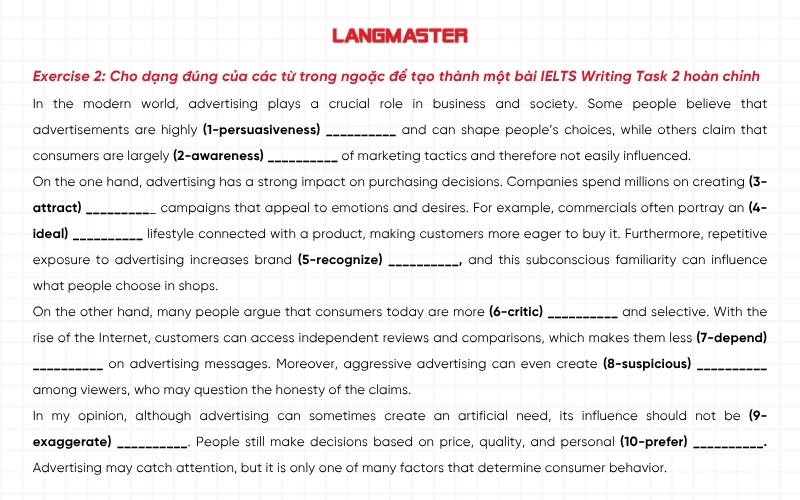
Exercise 2: Cho dạng đúng của các từ trong ngoặc để tạo thành một bài IELTS Writing Task 2 hoàn chỉnh
Some people think that advertising strongly influences consumer choices, while others argue that it has little real impact.
Discuss both views and give your own opinion.
In the modern world, advertising plays a crucial role in business and society. Some people believe that advertisements are highly (1-persuasiveness) __________ and can shape people’s choices, while others claim that consumers are largely (2-awareness) __________ of marketing tactics and therefore not easily influenced.
On the one hand, advertising has a strong impact on purchasing decisions. Companies spend millions on creating (3-attract) __________ campaigns that appeal to emotions and desires. For example, commercials often portray an (4-ideal) __________ lifestyle connected with a product, making customers more eager to buy it. Furthermore, repetitive exposure to advertising increases brand (5-recognize) __________, and this subconscious familiarity can influence what people choose in shops.
On the other hand, many people argue that consumers today are more (6-critic) __________ and selective. With the rise of the Internet, customers can access independent reviews and comparisons, which makes them less (7-depend) __________ on advertising messages. Moreover, aggressive advertising can even create (8-suspicious) __________ among viewers, who may question the honesty of the claims.
In my opinion, although advertising can sometimes create an artificial need, its influence should not be (9-exaggerate) __________. People still make decisions based on price, quality, and personal (10-prefer) __________. Advertising may catch attention, but it is only one of many factors that determine consumer behavior.
Exercise 3: Có 4 lỗi sai trong đoạn văn sau. Tìm và sửa chúng để tạo thành một bài IELTS Speaking Part 3 hoàn chỉnh.
In my opinion, governments should providing more training programs for young people, because it can help them develop essential skills. For example, communication and team-work are one of the most important abilities that employers are look for nowadays. If the government invest more in practical workshops, students could applying these skills directly in real-life situations. Personally, I think this approach would be more effective than just increase the number of theoretical courses.
Exercise 4: Chọn đáp án đúng nhất điền vào mỗi chỗ trống dưới đây.
In the modern era, technology has transformed the way people communicate. Only a few decades ago, letters and telephone calls were the main forms of interaction. Today, however, instant messaging and video conferencing have become the norm. While this shift has made communication more (1) _____, it has also created new challenges. For instance, the overuse of online platforms may reduce the quality of face-to-face conversations.
Another consequence of digital communication is its impact on workplace culture. Employees are now expected to respond to messages almost immediately, which can increase productivity but also lead to higher levels of (2) _____. Some researchers argue that this constant connectivity may blur the (3) _____ between professional and personal life, leaving workers with little time to disconnect.
Nevertheless, the benefits of technology cannot be denied. It allows companies to collaborate across continents and gives individuals unprecedented access to knowledge. With the (4) _____ of artificial intelligence, communication tools are becoming smarter, offering real-time translation and predictive typing. Yet, society must consider how to strike a (5) _____ between convenience and the preservation of meaningful human interaction.
|
Câu 1: |
A. efficient |
B. efficiency |
C. efficiently |
D. effect |
|
Câu 2: |
A. relaxation |
B. stress |
C. relief |
D. comfort |
|
Câu 3: |
A. connections |
B. differences |
C. boundaries |
D. standards |
|
Câu 5: |
A. barrier |
B. compromise |
C. balance |
D. solution |
Exercise 5. Bài tập câu điều kiện
1. If governments ______ more money in renewable energy, pollution could decrease.
A. invest
B. invested
C. will invest
D. investing
2. If public transport were more reliable, more people ______ their cars at home.
A. leave
B. left
C. would leave
D. will leave
3. If stricter traffic regulations had been introduced earlier, congestion ______ less severe.
A. would be
B. would have been
C. will be
D. has been
4. Unless people ______ their consumption habits, environmental problems may become more serious.
A. change
B. changed
C. will change
D. had changed
5. If students receive regular feedback, they ______ their mistakes more easily.
A. identify
B. would identified
C. identifying
D. had identified
6. If I ______ more free time, I would participate in volunteer activities.
A. have
B. had
C. will have
D. have had
7. If governments had invested more in public transport in the past, cities ______ less congested today.
A. are
B. would be
C. had been
D. will be
8. If people exercise regularly, they ______ their risk of developing certain diseases.
A. reduce
B. reduced
C. would reduced
D. had reduce
9. If modern technology ______ unavailable, many companies would struggle to operate efficiently.
A. is
B. were
C. has been
D. will be
10. If the students had managed their time better, they ______ their assignments on time.
A. finish
B. would finish
C. would have finished
D. finished
>> Xem thêm: Học IELTS để làm gì? Những lợi ích khi có chứng chỉ IELTS
Exercise 6. Bài tập mệnh đề quan hệ
1. Students ______ receive constructive feedback can improve more quickly.
A. which
B. who
C. whose
D. where
2. Public libraries, ______ provide free access to information, remain important community facilities.
A. that
B. which
C. who
D. where
3. The city ______ I grew up has changed considerably.
A. which
B. who
C. where
D. whose
4. Employees ______ working hours are flexible may experience a better work-life balance.
A. who
B. whose
C. which
D. whom
5. Online learning is a method ______ allows students to study from almost any location.
A. who
B. where
C. that
D. whose
6. The professor ______ research was published last year received an international award.
A. who
B. whom
C. whose
D. which
7. People ______ live in overcrowded cities may experience higher levels of stress.
A. whom
B. whose
C. who
D. which
8. The year ______ the company was founded was 2010.
A. who
B. when
C. which
D. whose
9. The programme, ______ was launched last year, has attracted thousands of participants.
A. that
B. who
C. which
D. where
10. This is the university ______ my sister studied engineering.
A. where
B. whose
C. which
D. who
Exercise 7. Bài tập câu bị động
1. Millions of tonnes of plastic waste ______ every year.
A. produce
B. are produced
C. is producing
D. have produced
2. A new metro system ______ in the city next year.
A. will introduce
B. introduces
C. will be introduced
D. has introduced
3. Several environmental policies ______ over the past decade.
A. have been implemented
B. have implemented
C. implemented
D. implementing
4. Students ______ to submit their assignments before Friday.
A. require
B. requiring
C. are required
D. have required
5. The new hospital ______ in 2024.
A. was completed
B. completed
C. has completing
D. was completing
6. More renewable energy ______ in the future.
A. should use
B. should using
C. should be used
D. has used
7. The survey ______ by more than 2,000 participants.
A. completing
B. was completed
C. completed itself
D. has complete
8. New regulations ______ to protect the environment.
A. have introduced
B. introducing
C. have been introduced
D. have introduce
9. The final results ______ next Monday.
A. will announce
B. announcing
C. have announced
D. will be announced
10. Many historic buildings ______ during the twentieth century.
A. destroyed
B. were destroyed
C. are destroying
D. have destroy
Exercise 8. Bài tập cấu trúc so sánh
1. The percentage of people using public transport was ______ that of people travelling by bicycle.
A. higher than
B. more high than
C. higher that
D. the more high
2. Company A produced ______ products as Company B.
A. twice as many
B. twice more
C. twice much
D. more twice
3. The unemployment rate in City A was slightly ______ than that in City B.
A. low
B. lower
C. lowest
D. more lowest
4. Car ownership was ______ in 2025 than in 2015.
A. considerably higher
B. considerably highest
C. more considerably high
D. considerable higher
5. The figure for women was almost the same ______ the figure for men.
A. than
B. as
C. with
D. of
6. Country A recorded ______ percentage of internet users among the five countries.
A. high
B. higher
C. the highest
D. more high
7. In 2020, expenditure on housing was three times ______ spending on transportation.
A. as high as
B. higher as
C. highest than
D. as higher as
8. The figure for France was significantly ______ than that for Germany.
A. large
B. larger
C. largest
D. more largest
9. Petrol consumption was ______ in January than in February.
A. slightly lower
B. slight lower
C. more slightly low
D. lowest
10. Of the four categories, food accounted for ______ proportion of household expenditure.
A. large
B. larger
C. the largest
D. most large
>> Xem thêm: IELTS Listening: Các dạng bài và tiêu chí chấm điểm mới nhất
Exercise 9. Bài tập liên từ và câu phức
1. ______ online learning is convenient, some students still prefer face-to-face classes.
A. Because
B. Although
C. Therefore
D. Unless
2. Many people choose private vehicles ______ public transport is often overcrowded.
A. although
B. because
C. despite
D. however
3. The government increased taxes on cigarettes ______ reduce smoking rates.
A. so that
B. in order to
C. although
D. despite
4. ______ the high cost of university education, many students continue to pursue a degree.
A. Although
B. Because
C. Despite
D. Since
5. Some people believe technology improves communication, ______ others argue that it reduces face-to-face interaction.
A. because
B. whereas
C. therefore
D. unless
6. People should exercise regularly ______ they want to maintain good health.
A. if
B. despite
C. although
D. whereas
7. Air pollution has increased ______ the number of private vehicles has risen.
A. because
B. despite
C. whereas
D. unless
8. ______ governments take immediate action, the problem may become more serious.
A. Because
B. Unless
C. Despite
D. Whereas
9. Many people prefer living in cities ______ they offer more employment opportunities.
A. although
B. because
C. despite
D. whereas
10. Public transportation is generally cheaper, ______ private vehicles are often more convenient.
A. whereas
B. because
C. therefore
D. unless
Bài 10. Bài tập tìm và sửa lỗi ngữ pháp IELTS
1. Many young people believes that studying abroad provide better career opportunities.
2. The number of private vehicles have increased significantly during the past decade.
3. Although public transport is cheaper, but many people still prefer private cars.
4. Governments should invests more money in renewable energy.
5. People who lives in large cities often experience higher levels of stress.
6. There are a significant difference between the two figures.
7. Technology has become more important in people's lives since many years.
8. If public transport will become more efficient, fewer people may use private cars.
9. One of the main reason for air pollution is the increasing number of vehicles.
10. Children should be encouraged participate in outdoor activities.
| Học mãi mà IELTS không lên band? Học thử IELTS miễn phí cùng giáo viên 7.5+, chấm chữa lỗi sai ngay lập tức. 👉 Đăng ký học thử miễn phí ngay |
Exercise 1: Chọn đáp án đúng nhất để điền vào chỗ trống
Exercise 2: Cho dạng đúng của các từ trong ngoặc để tạo thành một bài IELTS Writing Task 2 hoàn chỉnh
Exercise 3: Có 3 lỗi sai trong đoạn văn sau. Tìm và sửa chúng để tạo thành một bài IELTS Speaking Part 3 hoàn chỉnh.
Lỗi 1: greatly → great
Lỗi 2: quick → quickly
Lỗi 3: happier → happy
Exercise 4: Chọn đáp án đúng nhất điền vào mỗi chỗ trống dưới đây.
Exercise 5: Viết lại các câu sau sao cho nghĩa không đổi.
>> Xem thêm: Top 10+ trung tâm IELTS uy tín, chất lượng tốt nhất tại Hà Nội
Exercise 6. Các thì trong tiếng Anh
Exercise 7. Bài tập Subject–Verb Agreement
Exercise 8. Bài tập mạo từ A, An, The và Zero Article
Exercise 9. Bài tập giới từ tiếng Anh
Exercise 10. Bài tập Word Forms
>> Xem thêm: Lộ trình học IELTS từ 0 đến 4.0 chi tiết cho người mới bắt đầu

Exercise 1: Chọn đáp án đúng nhất để điền vào chỗ trống
Exercise 2: Cho dạng đúng của các từ trong ngoặc để tạo thành một bài IELTS Writing Task 2 hoàn chỉnh
Exercise 3: Có 4 lỗi sai trong đoạn văn sau. Tìm và sửa chúng để tạo thành một bài IELTS Speaking Part 3 hoàn chỉnh.
Lỗi 1: should providing → should provide
Lỗi 2: are look for → are looking for
Lỗi 3: invest → invests
Lỗi 4: could applying → could apply
Exercise 4: Chọn đáp án đúng nhất điền vào mỗi chỗ trống dưới đây.
Exercise 5. Câu điều kiện
>> Xem thêm: Sách học từ vựng IELTS hiệu quả nhất cho người mới
Exercise 6. Mệnh đề quan hệ
Exercise 7. Câu bị động
Exercise 8. Cấu trúc so sánh trong IELTS Writing Task 1
Exercise 9. Liên từ và câu phức
>> Xem thêm: Top các khóa học IELTS cho người đi làm uy tín, cam kết đầu ra
Exercise 10. Tìm và sửa lỗi ngữ pháp IELTS
Làm nhiều bài tập chưa chắc giúp ngữ pháp tiến bộ nếu bạn chỉ kiểm tra đáp án rồi chuyển sang bài mới. Để cải thiện Grammar bền vững, người học cần kết hợp ôn kiến thức, nhận diện lỗi sai và vận dụng cấu trúc vào ngữ cảnh IELTS thực tế.
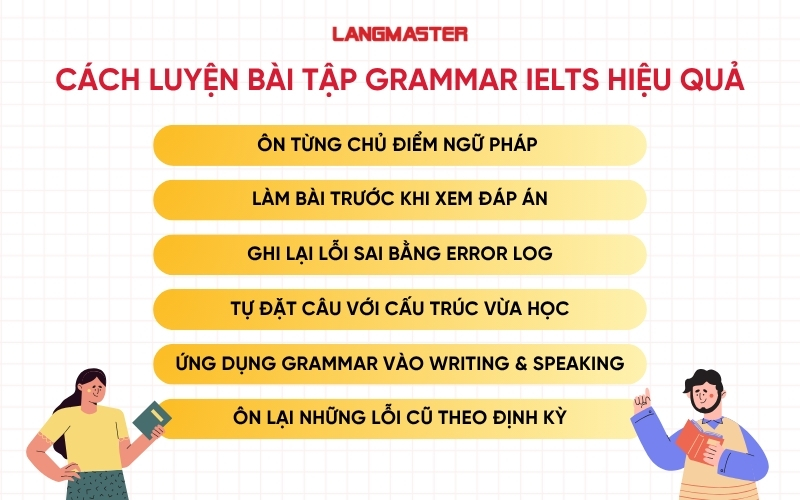
Thay vì học quá nhiều kiến thức cùng lúc, bạn nên tập trung vào từng chủ điểm như thì, câu điều kiện, mệnh đề quan hệ hoặc câu bị động. Trước khi làm bài, hãy ôn lại công thức, cách dùng và những lỗi thường gặp. Cách học theo từng nhóm kiến thức giúp bạn dễ hệ thống lại nền tảng, tránh học lan man và xác định chính xác chủ điểm nào mình còn yếu để tập trung cải thiện.
Khi luyện bài tập Grammar IELTS, bạn nên hoàn thành toàn bộ câu hỏi trước khi kiểm tra đáp án. Điều này giúp đánh giá chính xác mức độ ghi nhớ và khả năng vận dụng kiến thức của bản thân. Nếu xem đáp án quá sớm, người học dễ có cảm giác đã hiểu nhưng thực tế chưa thể tự xử lý câu hỏi. Sau mỗi bài, hãy chú ý không chỉ số câu đúng mà còn nguyên nhân khiến mình chọn sai.
Error Log là cách ghi lại những lỗi ngữ pháp thường xuyên mắc phải trong quá trình luyện tập. Bạn có thể ghi theo các mục như câu sai, đáp án đúng, quy tắc liên quan và nguyên nhân mắc lỗi. Khi các lỗi được hệ thống theo từng nhóm, bạn sẽ dễ nhận ra những điểm yếu lặp lại. Đây cũng là cách giúp việc ôn tập có trọng tâm hơn thay vì liên tục làm thêm bài mới nhưng vẫn mắc lại lỗi cũ.
Sau khi hiểu đáp án và quy tắc ngữ pháp, bạn nên chủ động đặt câu bằng cấu trúc vừa học. Bước này giúp chuyển kiến thức từ mức độ nhận biết sang khả năng sử dụng thực tế. Nếu chỉ làm bài trắc nghiệm, người học có thể chọn đúng đáp án nhưng vẫn gặp khó khăn khi tự viết hoặc nói. Việc tự tạo câu còn giúp bạn kiểm tra xem mình đã thực sự hiểu cấu trúc hay mới chỉ ghi nhớ công thức.
>> Xem thêm: Lộ trình học IELTS 5.0 cho người mới bắt đầu
Mục tiêu của việc luyện Grammar IELTS không chỉ là làm đúng bài tập mà còn phải sử dụng ngữ pháp chính xác trong Writing và Speaking. Sau mỗi chủ điểm, bạn nên thử vận dụng cấu trúc đó khi viết câu, phát triển ý hoặc trả lời câu hỏi. Cách luyện này giúp ngữ pháp gắn với ngữ cảnh bài thi, đồng thời cải thiện khả năng sử dụng cấu trúc linh hoạt thay vì học các công thức rời rạc.
Kiến thức ngữ pháp rất dễ bị quên nếu chỉ học một lần rồi chuyển sang chủ điểm mới. Vì vậy, bạn nên quay lại kiểm tra những câu từng làm sai sau vài ngày hoặc một tuần. Nếu vẫn mắc cùng một lỗi, đó là dấu hiệu kiến thức chưa được củng cố chắc chắn. Việc ôn lặp lại theo từng nhóm lỗi giúp người học ghi nhớ lâu hơn, giảm sai sót và xây dựng nền tảng Grammar ổn định hơn.
>> Xem thêm: Lộ trình học IELTS từ 0 đến 6.5 cho người mới bắt đầu
Không. IELTS không có một bài thi Grammar tách biệt. Tuy nhiên, Grammatical Range and Accuracy là tiêu chí đánh giá trực tiếp trong Writing và Speaking. Khả năng hiểu cấu trúc câu cũng hỗ trợ việc xử lý thông tin trong Reading và Listening.
Người mất gốc nên bắt đầu học ngữ pháp (Grammar) IELTS từ các cấu trúc câu cơ bản và từ loại cốt lõi trong tiếng Anh tổng quát, tuyệt đối không lao vào học ngữ pháp học thuật hay giải đề IELTS ngay. Các chủ điểm nền tảng bao gồm: Từ loại (Parts of Speech), Thì trong tiếng Anh (Tenses), Câu đơn (Simple Sentences), Mệnh đề và liên từ cơ bản.
Không cần đợi học hết Grammar mới bắt đầu IELTS. Cách hiệu quả hơn là ưu tiên những cấu trúc thường xuyên cần cho Reading, Writing và Speaking, sau đó bổ sung dần dựa trên lỗi thực tế của bản thân.
Làm nhiều bài tập ngữ pháp (grammar) chỉ giúp tăng band IELTS khi bạn biết cách áp dụng chúng vào các kỹ năng thực tế, thay vì chỉ làm bài tập điền vào chỗ trống một cách máy móc.
>> Xem thêm: 10+ Sách ngữ pháp IELTS từ cơ bản đến nâng cao cho mọi trình độ
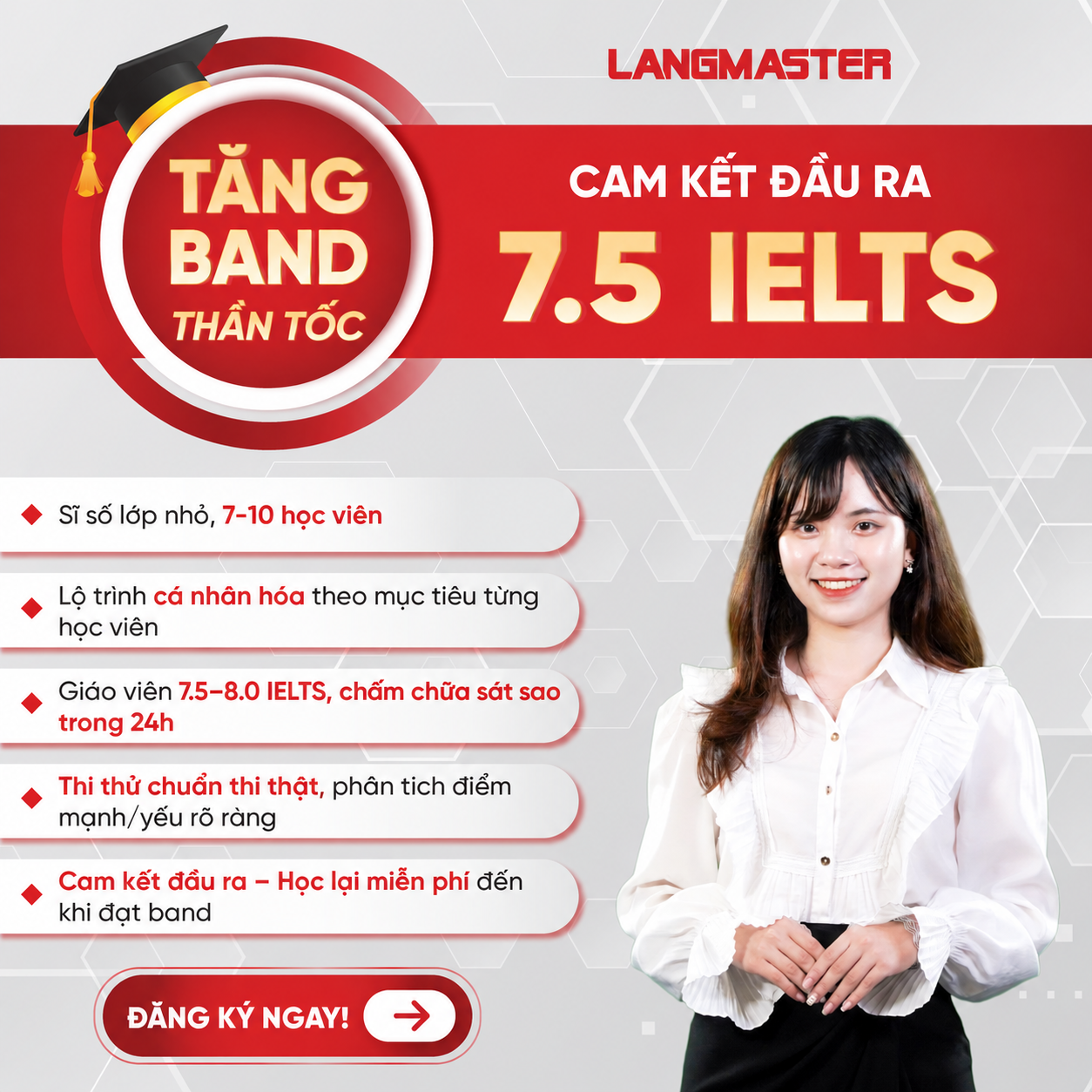
Ngữ pháp là nền tảng quan trọng để đạt điểm cao trong IELTS Writing và Speaking. Việc làm quen với các dạng bài tập ngữ pháp IELTS như viết lại câu, mệnh đề quan hệ, hay biến đổi cấu trúc câu sẽ giúp thí sinh cải thiện rõ rệt khả năng diễn đạt. Tại Langmaster, học viên được tham gia các khóa luyện thi IELTS bám sát đề thi thật, trong đó phần ngữ pháp luôn được chú trọng rèn luyện có hệ thống.
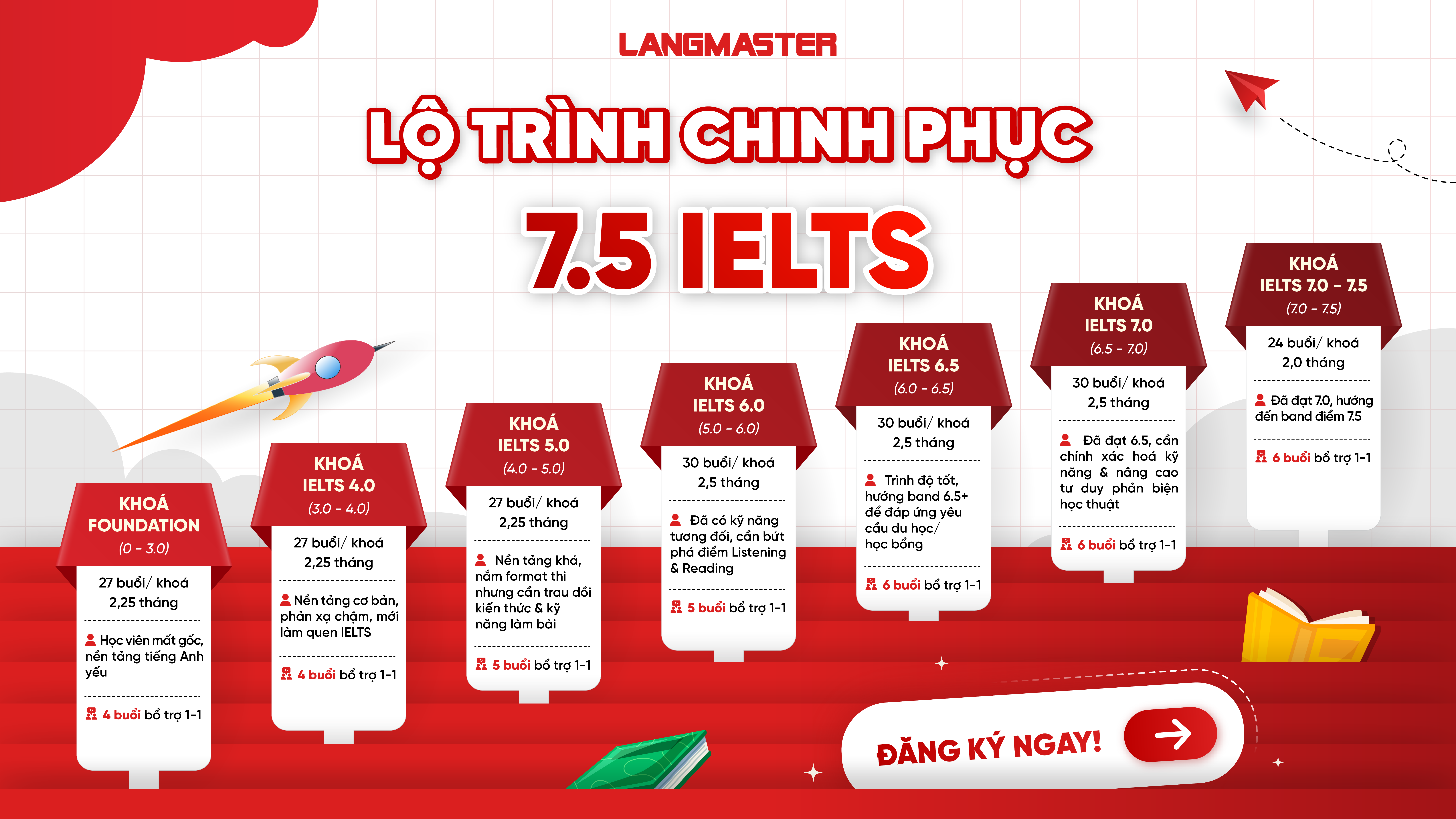
Ngoài ra, học viên có thể lựa chọn học tiếng Anh giao tiếp offline theo nhóm tại Hà Nội để tăng tương tác trực tiếp (face-to-face) với giảng viên và nâng cao trải nghiệm học tập:
Nếu bạn còn băn khoăn về lộ trình hay hình thức học phù hợp, đừng ngần ngại liên hệ cho Langmaster để được tư vấn chi tiết!
Ngữ pháp là chìa khóa để bạn viết và nói tiếng Anh một cách chính xác, tự nhiên trong kỳ thi IELTS. Với lộ trình học tập khoa học và sự đồng hành của đội ngũ chuyên gia tại Langmaster, bạn hoàn toàn có thể khắc phục điểm yếu ngữ pháp nhanh chóng. Hãy bắt đầu ngay hôm nay để tiến gần hơn tới band điểm mơ ước!


Bộ đề dự đoán IELTS Writing Quý 2/2026 mới nhất, tổng hợp đầy đủ Task 1 và Task 2 giúp bạn luyện tập đúng trọng tâm và làm quen với xu hướng ra đề.
Cập nhật đề dự đoán IELTS Speaking Quý 3/2026 mới nhất, kèm sample answer band 7+ dịch tiếng Việt chi tiết, đúng chuẩn tiêu chí chấm điểm 4 kỹ năng.
![Giải đề thi thật IELTS Reading ngày 02.04.2026 [FULL ANSWERS]](https://langmaster.edu.vn/storage/uploads/original/2026/04/08/giai-de-thi-ielts-reading-ngay-02-04-2026.png)
Giải đề thi thật IELTS Reading ngày 02.04.2026 với full đáp án chi tiết, giải thích rõ ràng từng câu giúp bạn hiểu cách làm và nâng cao kỹ năng đọc hiệu quả.
![Trọn bộ Expert IELTS level 5.0, 6.0, 7.5 [Download PDF]](https://langmaster.edu.vn/storage/uploads/original/2025/12/31/review-sach-expert-ielts .png)
Bộ sách Expert IELTS (5.0, 6.0, 7.5) do Pearson Longman phát hành là tài liệu luyện thi IELTS bài bản, tích hợp đầy đủ 4 kỹ năng cùng ngữ pháp và từ vựng học thuật theo chủ đề, giúp người học xây dựng nền tảng vững chắc và cải thiện band điểm hiệu quả

Thi tiếng Anh đầu vào đại học là kỳ thi xếp lớp, không ảnh hưởng đến trúng tuyển. Kết quả giúp nhà trường đánh giá năng lực để phân bổ lộ trình học ngoại ngữ phù hợp.




Hơn 16 năm kinh nghiệm, đào tạo thành công hàng trăm nghìn học viên
Phương pháp giảng dạy hiện đại, học viên tiến bộ rõ rệt
Lộ trình học chuẩn quốc tế, phù hợp với nhu cầu thực tiễn
Giáo viên đạt chuẩn Quốc tế với chất lượng top đầu thị trường, giàu kinh nghiệm
Học online linh hoạt, cam kết đầu ra bằng văn bản

![Ngày cấp chứng chỉ IELTS ghi ở đâu? [Giải đáp chi tiết]](https://langmaster.edu.vn/storage/images/2025/09/16/17.webp)